For the current mandate (October 2020 to April 2023) of the Civil Society Organisations’ Group (Group III), it has been decided to concentrate on the topic of poverty and on the role of civil society organisations and citizens' initiatives in combating it. The objective of the work programme of Group III for this period is to contribute to making local communities more sustainable, resilient, equitable, productive and socially just, whilst also upholding the highest levels of democratic governance, respect for rights and the rule of law.
The EU as a driver of shared prosperity – civil society for an economy that works for people & the planet
-
Location
HYBRID EVENT • EESC
Brussels
Belgium
While Europe and its societies are still in the grip of the COVID-19 pandemic and with the Conference on the Future of Europe in its closing stages, the EESC will be holding its annual Civil Society Days in March 2022.
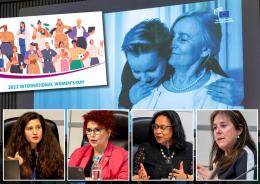
The conference on Women in the Labour Market organised by the EESC to mark International Women's Day, was held on 8 March under the shadow of the war. The participants paid tribute to the remarkable Ukrainian women for their strength, bravery and resilience. Attention was drawn to different aspects of gender equality such as the need to increase women's participation in the labour market, especially with regard to new digital and green jobs, to facilitate female entrepreneurship, to improve care services and work-life balance, and to tackle gender stereotypes and work-related harassment.
On 14 March, the EESC NAT and INT Sections, the Fair Trade Advocacy Office and the Global Competition Law Centre of the College of Europe organise an online conference to continue the debate on how joint sustainability initiatives can be competition law compliant.
Social dialogue is an important tool for ensuring health and safety at work. However, in the face of changes brought to the world of work by the digital and green transition and the health crisis, social dialogue will have to be strengthened across Europe. It should be complemented by more robust rules on musculoskeletal disorders and psychosocial risks leading to major work-related illnesses such as heart conditions, stroke, cancer and depression