
European Economic
and Social Committee
The European industry is back
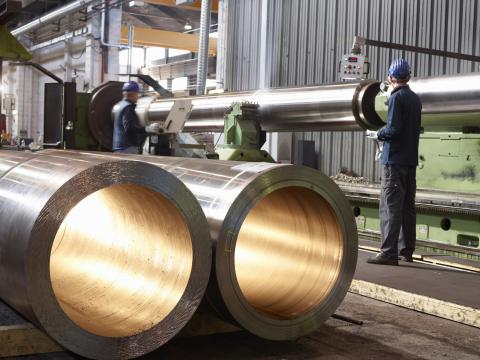
Without a strong European industry, neither strategic autonomy nor the essential competitiveness of the European economy can be achieved. European citizens need the EU to maintain a strong industrial base as a source of quality jobs, progress, innovation and high value-added services. Finally, EU institutions have understood this urgency.
In this context, and in connection with the cost-of-living crisis, the EESC decided to launch what it calls an ‘umbrella opinion’ covering different angles and sectors. The EESC Consultative Commission of Industrial Change (CCMI) identified reindustrialisation to counteract the impact of the cost-of-living crisis on European citizens and businesses.
While welcoming the European Commission's initiative to launch a Competitiveness Compass, our Opinion calls for the inclusion of clear benchmarks and performance indicators so that the Compass does not remain mere rhetoric.
In the field of energy, which is currently a disincentive to European industry and the economy, the Opinion calls for rapid measures, not just long-term ones, to achieve secure, stable and predictable energy at a price that allows businesses to be competitive and does not stifle families.
Strategic autonomy must be at the heart of the reindustrialisation process, acting not only on the companies directly affected, but also on the value chain. European industry is facing a shortage of skilled workers, and there are calls to reduce bureaucracy in the granting of work permits within the framework of European legislation. What we need is to attract skilled workers who will enrich European society.
The aim of industrial policy must be therefore for the EU to regain its attractiveness and become once again a friendly place for industrial investment, taking advantage of the skills of its workers, legal certainty and, of course, the single market.
Social dialogue must be fully integrated in the reindustrialisation process, which affects not only large companies but above all SMEs, which make up the vast majority of European businesses.
There is one issue that is particularly sensitive in some social and political groups: simplifying bureaucracy. As the President of the Employers' Group says, “simplification does not mean deregulation. It is not about dismantling the Green Deal or essential social safeguards... It is about removing bureaucracy that benefits no one”.
As always, the devil is in the details, but far from being discouraged, we must deepen a process of reindustrialisation that involves investment across the entire chain, from public investment in infrastructure to business investment in industry, promoting high-quality jobs, encouraging lifelong professional retraining, maintaining the social standards that are at the heart of the EU legislation, and promoting business innovation as a means of continuous improvement and development of high value-added services.
This is no easy task, but I firmly believe that a strong industry, established throughout the EU, can be one of the main drivers for improving the competitive position of the European economy and substantially improving the situation of European citizens and businesses alike.
By Andrés Barceló Delgado, EESC Employers' Group member and Rapporteur of Opinion CCMI/239 Reindustrialisation of Europe in the context of the cost-of-living crisis.
Recommended for you
Sabiedrisko pakalpojumu līdzradīšana veselības nozarē būs ieguldījums līdzdalības demokrātijas stiprināšanā Eiropas Savienībā
News
Šajā pasākumā, ko organizēja Eiropas Ekonomikas un sociālo lietu komiteja (EESK) un Debrecenas Universitāte, tika uzsvērts, cik būtiska ir vispārējas nozīmes pakalpojumu līdzradīšana veselības un…
Eiropas Savienībai ir vajadzīgs rīcības plāns, lai nodrošinātu cenas ziņā pieejamus un kvalitatīvus mājokļus
News
Augsta līmeņa konferencē, ko Rīgā rīkoja Eiropas Ekonomikas un sociālo lietu komiteja (EESK), tika paustas bažas par cenas ziņā pieejamu mājokļu krīzi un izskanēja brīdinājumi, ka Eiropas Savienībai…
Migrantu instrumentalizācija un Ukrainas bēgļu krīze liek no jauna pievērsties migrācijas politikai
News
Valsts finansētā migrantu instrumentalizācija, kuras mērķis ir destabilizēt ES, un pašreizējais karš Ukrainā, kas novedis pie vēl nepieredzēta bēgļu pieplūduma, liek pārskatīt Eiropas migrācijas…
“JŪSU EIROPA, JŪSU LĒMUMI” 2023. gadā jaunieši prasa pārredzamāku, digitālāku un vienkāršotāku Eiropas Savienību
News
23. un 24. martā Eiropas Ekonomikas un sociālo lietu komitejā 14. reizi norisinājās pasākums “Jūsu Eiropa, jūsu lēmumi”, kurā piedalījās 105 skolēni no 35 skolām. Jaunieši bija ieradušies no visām…
#EnergyPoverty – enerģētiskā nabadzība sievietes skar vairāk nekā vīriešus
News
Ekonomisku, fizioloģisku, sociālu un kultūras iemeslu dēļ enerģētiskā nabadzība sievietes var skart vairāk nekā vīriešus. Ņemot vērā jaunākos satraucošos statistikas datus, Eiropas Ekonomikas un…