
European Economic
and Social Committee
The French approach to carbon farming: NAT Bureau Members visit the Rouen area
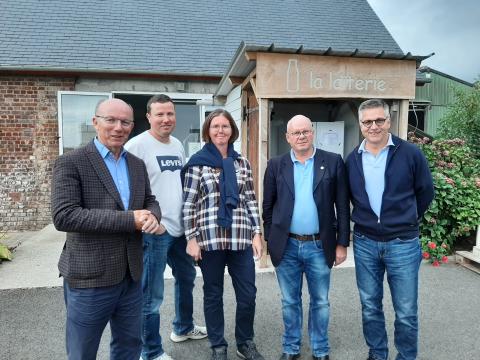
Extraordinary NAT bureau meeting | 8-9 September 2022 | Rouen, France
An extraordinary NAT Bureau meeting took place in France, Rouen, on 8-9 September 2022, upon the initiative of Mr Arnold Puech d'Alissac (Member of the Group of Employers). The aim was to explore the French approach on carbon-farming as a follow-up of the EESC opinion on sustainable carbon cycles, as well as the agricultural assets of the Normandy region.
On the first day, the Members held an exchange of views with representatives of the Chambre d'agriculture de Normandie and the France Carbon Agri Association on the legal and organisational measures in place in France to reduce carbon emissions in agricultural holdings under the French "Label bas-carbone" (diagnostic tool Cap2ER for ruminant farms). The discussion also looked at the carbon market price and the potential extension of the French tools at European level, in preparation of the future work on a European framework for certifying carbon removals.
The Members then visited the dairy farm of Aline and Sébastien Catoir in Normandy, which is at the forefront of carbon farming. This was the occasion to learn about concrete measures of carbon emissions reduction (feed and forage production at the farm, permanent grassland, management of hedgerows to store carbon under the Carbocage project, …) and of sustainable farming (rainwater harvesting, electricity production through solar panels,…).
On the second day, the Members visited the Rouen's harbour, which exports more than 50% of the cereals exported in France (being the second European harbour for cereals' export) and hosts various agri-food infrastructures, for example for the production of fertilizers and flour. The Members also discussed the impact of the war in Ukraine, with the opening of new markets for the export of cereals, for example with north-African countries.
A visit of a French flax cooperative ("Coopérative de Teillage du Vert Galant") was then organised. France produces 80% of the world flax production, and the Normandy region 50 % of the French production. The members discussed issues relating to the sustainable production of the flax (crop needing few fertilizers and few plant protection products), the transformation of the product (most flax is exported, only a few factories still work in France to spin the flax), and labelling issues (a label should be developed to value the local production and enhance information on the product).
Last but not least, the Bureau Members were invited to visit the farm of Arnold Puech d'Alissac.
Work organisation
Recommended for you
Sabiedrisko pakalpojumu līdzradīšana veselības nozarē būs ieguldījums līdzdalības demokrātijas stiprināšanā Eiropas Savienībā
News
Šajā pasākumā, ko organizēja Eiropas Ekonomikas un sociālo lietu komiteja (EESK) un Debrecenas Universitāte, tika uzsvērts, cik būtiska ir vispārējas nozīmes pakalpojumu līdzradīšana veselības un…
Eiropas Savienībai ir vajadzīgs rīcības plāns, lai nodrošinātu cenas ziņā pieejamus un kvalitatīvus mājokļus
News
Augsta līmeņa konferencē, ko Rīgā rīkoja Eiropas Ekonomikas un sociālo lietu komiteja (EESK), tika paustas bažas par cenas ziņā pieejamu mājokļu krīzi un izskanēja brīdinājumi, ka Eiropas Savienībai…
Migrantu instrumentalizācija un Ukrainas bēgļu krīze liek no jauna pievērsties migrācijas politikai
News
Valsts finansētā migrantu instrumentalizācija, kuras mērķis ir destabilizēt ES, un pašreizējais karš Ukrainā, kas novedis pie vēl nepieredzēta bēgļu pieplūduma, liek pārskatīt Eiropas migrācijas…
“JŪSU EIROPA, JŪSU LĒMUMI” 2023. gadā jaunieši prasa pārredzamāku, digitālāku un vienkāršotāku Eiropas Savienību
News
23. un 24. martā Eiropas Ekonomikas un sociālo lietu komitejā 14. reizi norisinājās pasākums “Jūsu Eiropa, jūsu lēmumi”, kurā piedalījās 105 skolēni no 35 skolām. Jaunieši bija ieradušies no visām…
#EnergyPoverty – enerģētiskā nabadzība sievietes skar vairāk nekā vīriešus
News
Ekonomisku, fizioloģisku, sociālu un kultūras iemeslu dēļ enerģētiskā nabadzība sievietes var skart vairāk nekā vīriešus. Ņemot vērā jaunākos satraucošos statistikas datus, Eiropas Ekonomikas un…