
European Economic
and Social Committee
Statement by Séamus Boland, President of the European Economic and Social Committee (EESC) and Stefano Palmieri, President of the Section for External Relations (REX)
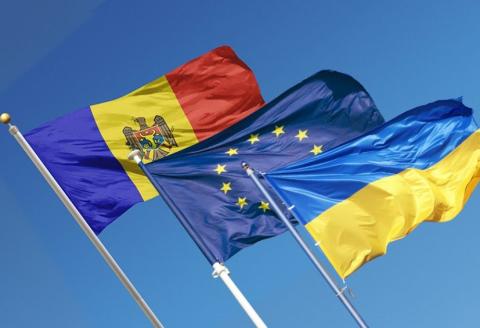
As a steadfast supporter of the European Union's enlargement, the European Economic and Social Committee (EESC) welcomes the formal opening of the first negotiation cluster (known as the ‘Fundamentals’ cluster) at the second Accession Conferences held respectively with Ukraine and the Republic of Moldova in Luxemburg on 15 June 2026.
This significant milestone is a recognition of the aspirations, resilience, and hard work of the two candidate countries. The Committee acknowledges the remarkable progress despite the immense challenges posed by Russia’s ongoing war of aggression against Ukraine and its devastating and far-reaching impact. Against the backdrop of unprecedented disinformation campaigns aimed at undermining these efforts, the EESC pays tribute to the resilience, determination and commitment of the people of Ukraine and the Republic of Moldova, whose adherence to European values has been instrumental in advancing the reform process.
The EESC has consistently advocated for a merit-based, credible and timely enlargement process, underpinned by a meaningful and structured involvement of civil society, employers' organisations and trade unions. Enlargement has long been a strategic priority for the Committee, reflected in its Enlargement Candidate Members' initiative – a flagship project that actively involves civil society representatives from all EU candidates in the drafting of selected EESC opinions and in annual plenary high-level debates dedicated to enlargement.
The Committee's strong support for the European aspirations of Ukraine and the Republic of Moldova has been reaffirmed on numerous occasions, including during official visits to both candidate countries, as well as through regular exchanges with EU, Ukrainian and Moldovan political authorities and civil society stakeholders. Building on its extensive experience of structured civil society engagement through the EU–Ukraine and EU–Moldova Civil Society Platforms, the EESC stands ready to support both partners throughout the accession process.
This decision sends a clear signal to the people of Ukraine and the Republic of Moldova that their future lies within the European Union. Their accession to the EU will strengthen our Union, making it more resilient, prosperous, competitive and united. It will contribute to the stability, security and democratic strength of our common European project.