The ACP-EU Follow-up Committee gathered on 12 and 13 January 2023 to discuss a number of topical issues for the ACP-EU partnership, namely the Youth Action Plan in EU external action, circular economy, civil society in the context of the EU Strategy for Cooperation in the Indo-Pacific and the latest developments around the participation of civil society in the Economic Partnership Agreements.
The EESC included a youth delegate in its UNFCCC COP delegation for the first time in 2021 and committed to repeating this experience in the years to come. The EESC youth delegate to COP has a mandate of two years and at the end of each mandate a transparent and open selection process is carried out to designate the new delegate. This webinar will provide useful information for applicants.
To mark the International Day of Persons with Disabilities (3 December), the EESC presents the virtual photographic exhibition "Do you know these Sports Women?" The exhibition consists of a series of posters that present sports women from the eight Andalusian regions in Spain.
Exhibition hosted at the EESC under the initiative of the President of the EESC Workers' Group, Oliver Röpke, in collaboration with the International Labour Organisation and Alliance 8.7.
Proposals on economic governance and recommendations for the euro area
Event type
Debate
Location
Online event
In late November, the European Commission is expected to kick-off the annual cycle of economic policy coordination, including the publication of the new recommendations for the euro area for 2023.
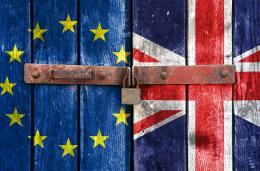
The upcoming meeting of the Section for External Relations, which will take place on 20 December 2022, will be dedicated to EU-UK relations. The EU-UK Follow-up Committee was set up in March 2021 primarily to maintain and strengthen relations between UK and EU civil society organisations, and to monitor implementation of the EU-UK Withdrawal Agreement.
The 10th meeting of the EU-Georgia Civil Society Platform (CSP) was convened on 16 December 2022. During the meeting, a debate focused on assessing the implementation of the 12 priorities identified by the EU and the state of play of the implementation of the EU-Georgia Association Agreement/DCFTA. The Platform also discussed the implementation of the Chapter 16 on Education, training and youth.
A joint declaration, prepared by both sides, was discussed and adopted.
574th Plenary session, with the following guests : Nicolas Schmit, European Commissioner responsible for Jobs and Social Rights, Álvaro Albacete Perea, Deputy Secretary-General of the Union for the Mediterranean, and Josep Ferré, Executive Director of the Anna Lindh Foundation, Ivailo Kalfin, Executive Director of Eurofound, Kinga Stanislawska, Founder of European Women in VC (Venture Capital) and Xenia Kazoli, Executive vice chairwoman of the Hellenic corporate governance council. And the Civil Society Prize award ceremony on Thursday 15 December at 10 a.m.
The packaging sector is pivotal to the resilience of the EU economy, as a strategic autonomy asset and as a key element to guarantee the security of products supply. For this reason, it is essential here to raise awareness about the central role that it plays in the EU economy.