This opinion focuses on the reform and investment measures in the Member States, in particular those based on the Country-Specific Recommendations 2023, and their implementation, in order to assess the effectiveness of these measures and the possibilities for better targeting of proposals, improved implementation and the monitoring and involvement of organised civil society in the procedures. This opinion also looks at issues concerning the ongoing reform of the EU’s economic governance rules, the central objective of which is to strengthen public debt sustainability while promoting sustainable and inclusive growth in all Member States through reforms and investment. Moreover, the opinion continues the previous consultation exercises by examining the state of the implementation of the reforms and investments provided for in the national Recovery and Resilience Plans and which are financially supported by RRF funds.
Download format:
Download — ETSK:n lausunto: Reform and investment proposals and their implementation in the Member States – what is the opinion of organised civil society? (2023-2024 European Semester cycle)
The 2023 edition of the EESC's annual European Citizens' Initiative (ECI) Day took place on 8 June. Participants in Brussels and online joined us to discuss how to upskill citizens for a successful ECI with impact.
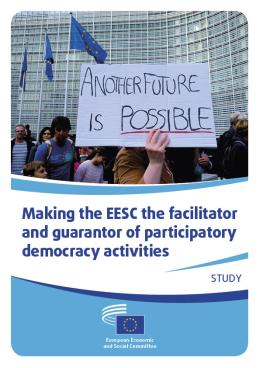
This study looks at the Conference on the Future of Europe’s (CoFoE) proposals on European democracy and the role of the European Economic and Social Committee (EESC). It explores different options for institutional reform of the EESC to best serve its purpose and increase citizens’ participation. To do this, the study examines different forms of participatory and deliberative practices, the current functions of the EESC, and the roles and structures of selected National Economic and Social Councils (NESCs).
Despite being recognised as a constitutional principle of the EU, participatory democracy in Europe is still largely unstructured, with no formal institutional agreements that would allow citizens and civil society organisations to directly contribute to the development of EU policies
Civil society organisations (CSOs) must be recognised, involved and supported as partners that defend and strengthen European democracy and contribute to a functioning rule of law culture.
Euroopan talous- ja sosiaalikomitea (ETSK) isännöi 23.–24. maaliskuuta 14. ”Sinun Eurooppasi, sinun mielipiteesi” -tapahtumaa, joka toi Brysseliin 105 opiskelijaa 35 koulusta EU:n 27 jäsenvaltiosta ja seitsemästä ehdokasmaasta. Lukuisat yhteiskunnalliset ja taloudelliset haasteet, kansalaisyhteiskunnan toimintamahdollisuuksien kaventuminen sekä rauhaan ja perusoikeuksiin kohdistuvat uhat huomioon ottaen tämänvuotisen konferenssin aiheeksi oli valittu nuorten demokratiavuoropuhelut. Konferenssin tavoitteena oli varmistaa, että nuoret saavat äänensä kuuluville Euroopan tulevaisuutta muovattaessa. Opiskelijoiden suositukset esitetään Euroopan unionin toimielimille ja korkean tason eurooppalaisille poliittisille päättäjille kesäkuussa 2023.
On 23 March, the European Economic and Social Committee (EESC) held a plenary debate and adopted a resolution entitled "United for Democracy" with concrete proposals to strengthen democracies and democratic values across the European Union. Policymakers, experts, and organised civil society representatives agreed that civic education, better funding to social partners and a focus on the local dimension, are key to democracy in Europe.