
European Economic
and Social Committee
From data to dignity: tackling energy poverty through policy innovation in Romania

Energy poverty is no longer just about cold homes in winter: it reflects unequal access to comfort, dignity and the benefits of modern life, and can have a significant impact on people's opportunities and societal cohesion. Among EU Member States, Romania remains one of the most severely affected by this complex issue. The Romanian Observatory of Energy Poverty (ORSE) plays a crucial role in bringing this issue out of the shadows, making it visible, measurable and, most importantly, actionable through policy.
Initiated by the Centre for the Study of Democracy at Babeș-Bolyai University in Cluj-Napoca, ORSE has evolved into a national network of experts covering energy markets, policy, environmental justice, data analysis, consumer behaviour and public engagement. As part of the EU-wide ENGAGER network and in close collaboration with the European Energy Poverty Advisory Hub (EPAH), ORSE provides data-driven insights that inform legislation and policy.
The 2024 ORSE Annual Report reveals the growing complexity of energy poverty in Romania. It highlights new and overlapping forms of vulnerability, such as seasonal energy poverty (both in summer and winter), transport poverty, particularly in rural or small urban communities, and the often-overlooked struggles of tenants and single mothers. Even middle-income households are increasingly affected.
ORSE’s research disaggregates data across regions, urban-rural divides and types of housing materials, heating technologies and energy access in under-resourced areas. The report proposes actionable recommendations, from local thermal efficiency programmes and access to clean energy, to coordinated action among multiple competent institutions and actors.
Thanks in part to ORSE’s sustained advocacy and community of practice, Romania adopted its Energy Poverty Law in 2021 and built poverty-reduction goals into its National Energy and Climate Plan. In 2024, the government took a significant step by launching a national network of one-stop shops for energy efficiency.
ORSE demonstrates how civil society can drive policy innovation, bridging gaps between science, administration and people’s lives. It offers a replicable model for other EU Member States seeking to design inclusive, data-informed responses to energy poverty—a challenge that sits at the heart of the just transition to Europe's climate-neutral economy with net-zero greenhouse gas (GHG) emissions by 2050.
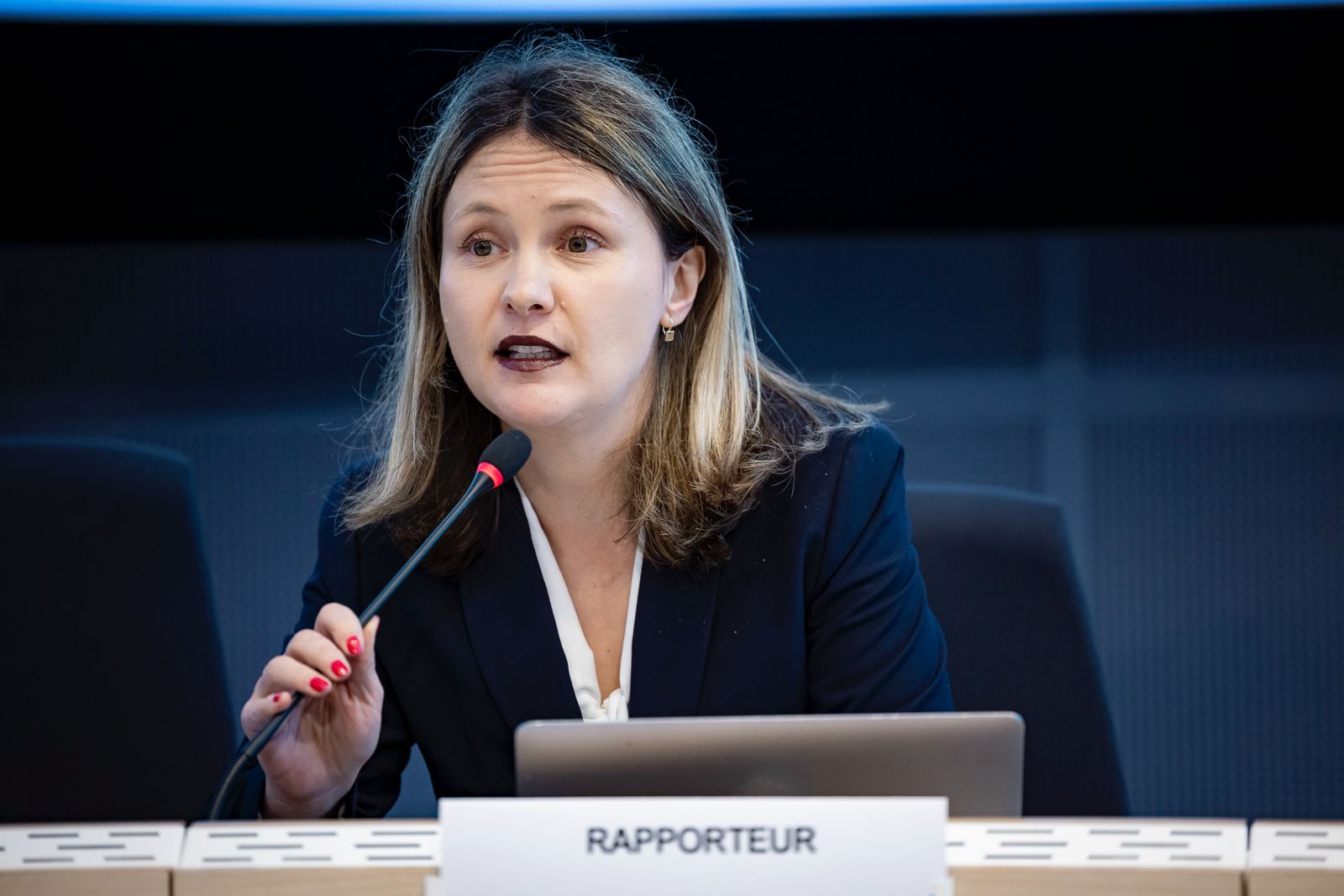 Corina Andrea MURAFA BENGA (Romania)
Member, EESC Civil Society Organisations' Group
Co-founder, Romanian Energy Poverty Observatory (ORSE) of the Centre for the Study of Democracy (CSD)
© EU/EESC
 Anca SINEA
Lecturer, Department for Political, Administrative and Communication Studies, Babeș-Bolyai University, Romania
Co-Chair, Romanian Energy Poverty Observatory