
European Economic
and Social Committee
EU's grønne pagt: Maroš Šefčovič' første grønne dialog finder sted i EØSU
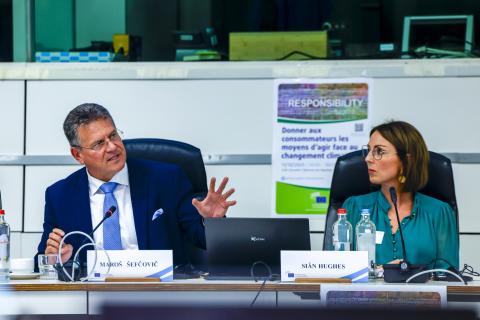
Af EØSU's Gruppe af civilsamfundsorganisationer
Maroš Šefčovič, ledende næstformand for Kommissionen, valgte vores konference Empowering consumers on climate change til den første af sine "grønne dialoger", hvilket han bebudede i oktober under sin høring i Europa-Parlamentets Udvalg om Miljø, Folkesundhed og Fødevaresikkerhed vedrørende stillingen som kommissær med ansvar for den grønne pagt.
I konferencen, som var arrangeret af EØSU's Gruppe af civilsamfundsorganisationer, deltog omkring 140 personer, blandt andre nationale og europæiske repræsentanter for civilsamfundsorganisationer og europæiske beslutningstagere. Arrangementet omfattede lanceringen af en undersøgelse, som EØSU havde bestilt om omkostningerne ved klimaforandringerne for husholdninger og familier i EU. Forbrugernes rolle og behovet for en miljømæssigt, socialt og økonomisk bæredygtig og inklusiv grøn omstilling, der kræver målrettede politikker og samarbejde mellem alle interessenter, blev også fremhævet under arrangementet.
Séamus Boland, formand for Gruppen af civilsamfundsorganisationer, åbnede arrangementet og fremførte, at Gruppen havde hilst Maroš Šefčovič' meddelelse om grønne dialoger velkommen. "Vi er beærede over, at du har valgt vores konference som forum for din første grønne dialog."
Maroš Šefčovič erklærede, at han har planer om regelmæssigt at afholde grønne dialoger for at udvikle og styrke offentlighedens støtte til den europæiske grønne pagt. "Vi ønsker at vise, at vi ikke blot har de juridiske løsninger, men også lytter og kerer os, samt at vi altid er parate til at samarbejde med interessenterne om at finde afbalancerede løsninger. Disse løsninger vil hjælpe os med at tackle klimaforandringerne, være socialt ansvarlige og bidrage til at skabe arbejdspladser af høj kvalitet i Europa. Jeres udvalg og jeres Gruppe er et fortræffeligt forum for disse dialoger."
Læs videre og find ud af mere om debatterne. Konklusionerne og anbefalingerne fra konferencen er tilgængelige på EØSU's websted.