
European Economic
and Social Committee
EESC urges new EU leaders to strengthen and preserve cohesion policy as key investment instrument
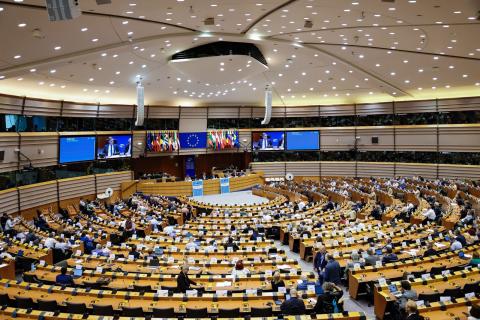
The European Economic and Social Committee (EESC) adopted a resolution during its July plenary session rejecting the idea of transforming cohesion policy into a mechanism similar to the Recovery and Resilience Facility (RRF). The EESC calls for cohesion policy to be strengthened and for civil society to be involved, just as it was for the 2021-2027 programming period.
Cohesion policy should not become a crisis management tool. The EESC resolution ‘No one left behind! For an inclusive and participatory cohesion policy in support of social, economic and territorial cohesion’, comes at a pivotal moment as the EU gears up again following the European elections in June. Some are arguing to dismantle cohesion policy, the EU’s main funding mechanism for regional development which aims to correct imbalances between countries and regions, and cut its budget. Even the position of Commissioner for Cohesion and Reforms is increasingly under scrutiny.
‘We want to be very clear and call on the Commission and the Parliament not to give in to pressure,’ insisted EESC president Oliver Röpke. ‘The EESC is opposed to transforming cohesion policy into a mechanism similar to the Recovery and Resilience Facility, which lacks significant stakeholder involvement and shared management.’
Mr Röpke has written to the new leaders of the political groups in the European Parliament, emphasising just how important this issue is.
The president of the EESC’s ECO section, Ioannis Vardakastanis said that ‘We firmly believe that the core principle of the EU’s cohesion policy, which asserts that “no one should be left behind,” continues to be crucial and valid. Civil society partners are committed to working together to meet this goal through robust EU investment policies.’
Protecting and modernising
The EESC stresses that RRF funds should be aligned with the future cohesion policy, built on a bottom-up approach with robust regional governance. Cohesion policy should not be solely crisis-oriented and must continue under the oversight of a dedicated Commissioner. Sufficient funding under an ambitious Multiannual Financial Framework, the EU’s long-term budget plan, is essential for future EU enlargement and ongoing investment in developing regions. This strategy aims to maintain the policy’s effectiveness and foster sustainable regional development over the long term.
The new resolution follows on from two previous sets of recommendations adopted in May 2024, where the EESC emphasised the importance of integrating and empowering civil society organisations to utilise cohesion funds effectively. The Committee also called for compliance tools to be enshrined in accession treaties in order to address potential post-accession challenges, such as emigration and rule of law concerns.
Read the resolution: https://europa.eu/!twGHpK
Contact
Thomas Kersten - Press Officer
Email: thomas.kersten@eesc.europa.eu
Phone: +32 2 546 89 31
Work organisation
Related content

Recommended for you
Rolul activ al societății civile organizate este esențial pentru o UE rezilientă
News
CESE a organizat, în sesiune plenară, o dezbatere privind importanța tot mai mare a societății civile organizate și a orașelor în asigurarea capacității Europei de a face față șocurilor asimetrice și…
Decision repealing Directive 89/629/EEC
Opinion
PUNCTE PRINCIPALE CESE: întrucât conținutul propunerii formulate este satisfăcător și nu face obiectul niciunei observații din partea sa, Comitetul a hotărât să emită aviz favorabil cu privire la…
Crearea în comun a serviciilor publice în sectorul sănătății va contribui la o democrație mai participativă în UE
News
Acest eveniment, organizat de Comitetul Economic și Social European (CESE) și de Universitatea din Debrecen, a evidențiat importanța crucială a creării în comun a serviciilor de interes general în…
Pentru a combate schimbările climatice, UE are nevoie de mai multe investiții publice în infrastructura energetică
News
Într-un aviz adoptat în sesiunea plenară din septembrie, Comitetul Economic și Social European (CESE) consideră că, pentru a realiza tranziția energetică și obiectivele climatice, sunt necesare…
Energie – CESE avertizează cu privire la crearea de noi dependențe
News
Într-un aviz adoptat în sesiunea sa plenară din septembrie Comitetul Economic și Social European (CESE) adoptă o poziție fermă în domeniul energiei: propunerea Comisiei reprezintă un pas în direcția…