
European Economic
and Social Committee
EESC urges new EU leaders to strengthen and preserve cohesion policy as key investment instrument
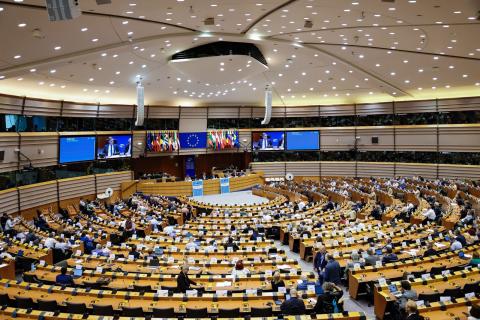
The European Economic and Social Committee (EESC) adopted a resolution during its July plenary session rejecting the idea of transforming cohesion policy into a mechanism similar to the Recovery and Resilience Facility (RRF). The EESC calls for cohesion policy to be strengthened and for civil society to be involved, just as it was for the 2021-2027 programming period.
Cohesion policy should not become a crisis management tool. The EESC resolution ‘No one left behind! For an inclusive and participatory cohesion policy in support of social, economic and territorial cohesion’, comes at a pivotal moment as the EU gears up again following the European elections in June. Some are arguing to dismantle cohesion policy, the EU’s main funding mechanism for regional development which aims to correct imbalances between countries and regions, and cut its budget. Even the position of Commissioner for Cohesion and Reforms is increasingly under scrutiny.
‘We want to be very clear and call on the Commission and the Parliament not to give in to pressure,’ insisted EESC president Oliver Röpke. ‘The EESC is opposed to transforming cohesion policy into a mechanism similar to the Recovery and Resilience Facility, which lacks significant stakeholder involvement and shared management.’
Mr Röpke has written to the new leaders of the political groups in the European Parliament, emphasising just how important this issue is.
The president of the EESC’s ECO section, Ioannis Vardakastanis said that ‘We firmly believe that the core principle of the EU’s cohesion policy, which asserts that “no one should be left behind,” continues to be crucial and valid. Civil society partners are committed to working together to meet this goal through robust EU investment policies.’
Protecting and modernising
The EESC stresses that RRF funds should be aligned with the future cohesion policy, built on a bottom-up approach with robust regional governance. Cohesion policy should not be solely crisis-oriented and must continue under the oversight of a dedicated Commissioner. Sufficient funding under an ambitious Multiannual Financial Framework, the EU’s long-term budget plan, is essential for future EU enlargement and ongoing investment in developing regions. This strategy aims to maintain the policy’s effectiveness and foster sustainable regional development over the long term.
The new resolution follows on from two previous sets of recommendations adopted in May 2024, where the EESC emphasised the importance of integrating and empowering civil society organisations to utilise cohesion funds effectively. The Committee also called for compliance tools to be enshrined in accession treaties in order to address potential post-accession challenges, such as emigration and rule of law concerns.
Read the resolution: https://europa.eu/!twGHpK
Contact
Thomas Kersten - Press Officer
Email: thomas.kersten@eesc.europa.eu
Phone: +32 2 546 89 31
Work organisation
Related content

Recommended for you
Decision repealing Directive 89/629/EEC
Opinion
PUNTI PRINCIPALI Il CESE: avendo concluso che il contenuto della proposta è soddisfacente e non richiede alcun commento da parte sua, ha deciso di esprimere parere favorevole al testo proposto.
La creazione condivisa di servizi pubblici nel settore sanitario contribuirà a una democrazia più partecipativa nell'UE
News
L'evento organizzato dal Comitato economico e sociale europeo (CESE) in collaborazione con l'Università di Debrecen ha posto in evidenza l'importanza cruciale della creazione condivisa di servizi di…
Per combattere i cambiamenti climatici, l'UE ha bisogno di maggiori investimenti pubblici nelle infrastrutture energetiche
News
In un parere adottato nella sessione plenaria di settembre, il Comitato economico e sociale europeo (CESE) avverte che, per realizzare gli obiettivi climatici e di transizione energetica, sono…
Energia - Il CESE mette in guardia di fronte al rischio di nuove dipendenze
News
Il Comitato economico e sociale europeo (CESE) assume una posizione ferma in materia di energia in un parere adottato nella sessione plenaria di settembre. La proposta della Commissione, infatti, è…
La transizione digitale deve essere equa: i diritti umani e il controllo umano devono rimanere pilastri fondamentali
News
Il Comitato economico e sociale europeo (CESE) sottolinea le opportunità offerte dalla rivoluzione digitale, ma mette anche in guardia dai rischi: se attuate troppo rapidamente, le soluzioni digitali…