With the launch of the 2025 European Semester cycle the European commission has published the "2025 European Semester - Autumn package" in December 2024. The 2025 European Semester - Autumn Package outlines economic and social policy priorities for the EU to ensure sustainable prosperity and competitiveness. It highlights the EU’s recent resilience while emphasizing the need to address structural barriers to growth. The EU is committed to ensure sustainable prosperity and competitiveness while strengthening its social market economy and safeguarding its sovereignty, economic security and global influence. The EESC's opinion on the 2025 European Semester - Autumn package is due to be adopted at the EESC plenary session of February 2025.
The upcoming Polish Presidency of the Council of the EU requested this exploratory opinion given that at present, consumers are experiencing dynamic changes due to the development of digital technologies and the green transition. In order to ensure a high level of consumer protection, it is necessary to respond adequately to changes in the consumer environment and to take action in response to current long-term challenges.
This new opinion aims to show with concrete examples the potential of combining advanced robotics and virtual worlds of the metaverse in the service of the medical sector and to draw conclusions on the actions to be implemented for Europe to become a leader in these sectors.
The European Union’s ambitious climate targets have significantly impacted resource and energy-intensive industries (REIIs), which are crucial to the EU economy. These industries face rising costs due to high energy prices, carbon pricing, and regulatory changes. This opinion reflects on the optimal solutions to maintain the competitiveness of EU industry in face if the rising energy prices and the costs required to support the transition towards a low-carbon economy. The EU Youth Test at the EESC was applied to this opinion.
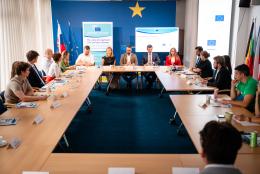
Introduced by the European Economic and Social Committee (EESC) in 2024, the Youth Test is now being recognised as a pioneering method for integrating youth voices into policy-making. A recent roundtable in Bratislava brought together young leaders, policymakers and civil society to examine how the Youth Test can be meaningfully integrated into national decision-making processes.