Interactio and Room JDE 62, EESC building, Rue Belliard 99
Brussels
Belgium
The EESC Thematic Study group on Disability Rights is organising a public hearing on 30 March 2021.
The objective of this hearing is to give the floor to one of the groups more hit by the COVID-19 pandemic: persons with disabilities (PWD). In particular, we will look into the situation concerning the prioritization of PWD, or lack of, in the vaccination rollouts within the EU.
Interactio and Room JDE 62, EESC building, Rue Belliard 99
Brussels
Belgium
In order to prepare its opinion on the recent health package proposed by the European Commission, the EESC is organising a public hearing on "Building a European Health Union" on 29 March 2021.
The aim of the event is to gather input from other EU Institutions, civil society and health professionals.
Welcomes Europe's Beating Cancer Plan as a milestone in the fight against cancer and calls for a concrete roadmap for its implementation, with performance indicators, realistic timeframes and close involvement of Social Partners (SP) and Civil Society Organisations (CSO).
Considers important that the EU and Member States ensure the availability of igh-quality, accessible healthcare infrastructure and effective support systems for patients' physical and mental well-being.
Asks for the negative consequences caused by the COVID-19 pandemic in accessing to health services to be urgently addressed, recognising as well the supportive role SP and CSO can play in this area.
Download format:
Download — EESK atzinums: Europe's beating cancer plan
The opinion, presenting EESC's position on the four proposals of the Health package published by the European Commission in November 2020, supports and welcomes these initiatives but draws the attention on some elements.
The EU and Member States should ensure that everyone has equal access to quality, well staffed, well equipped health and social services. This is particularly important in the context of the COVID-19 pandemic which has deepened existing inequalities.
Special attention in future EU policies should be given to healthcare workers and the need to improve working conditions, including pay, recruitment and retention, as well as their health and safety.
The new EU health package should be combined with the roll-out of the European Pillar of Social Rights (EPSR), particularly its principles 12, 16, 17 and 18 and the Action Plan on the EPSR. It should also be part of achieving Sustainable Development Goal (SDG) 3.
Download format:
Download — EESK atzinums: Building a European Health Union
Following the outbreak of the COVID-19 pandemic, the European Economic and Social Committee (EESC) played a central role in bringing the consensual views of organised civil society in the EU to the attention of policy-makers and contributing to the rapidly evolving economic policy response at European level.
In this regard, we believe that now is the time for the EU institutions to make decisive steps in approving swiftly the new Facility and putting in place the necessary implementation mechanisms at European and national level, so that the hardest hit Member States, citizens and businesses can benefit from the relevant EU funding when they need it most.
Against this background, and on the occasion of the first meeting of the EESC's Section for Economic and Monetary Union and Economic and Social Cohesion (ECO) in our new term-of-office (2020-2025), we are organising a thematic debate on this issue between European policy-makers and civil society representatives.
The debate will take place on Thursday, 19 November 2020 from 14.30 to 16.40 as an online event, webstreamed live on the EESC website.
The report is the result of the work of the Study Group on Disability Rights (SG DIS) of the past two years and half and brings together the EESC's recommendations gathered from different stakeholders with the objective to contribute to the EU reporting exercise to the United Nations Convention on the Rights of Persons with Disabilities (UNCRPD) Committee.
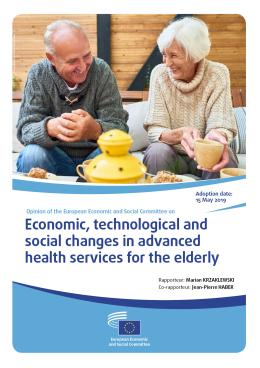
This brochure provides a review of the socio-economic realities of ageing in Europe and the challenges and opportunities that this new "silver economy" entails.
The revamped Union Civil Protection Mechanism (UCPM) is a tool through which the EU supports, coordinates and supplements actions of EU Member States in the field of civil protection in order to prevent, prepare and respond to natural and man-made disasters within and outside the EU. The new proposal aims to strengthen the UCPM to ensure that the EU and its Member States are better prepared to respond to large-scale emergencies such as the COVID-19 pandemic.
Download format:
Download — EESK atzinums: Union Civil Protection Mechanism