
European Economic
and Social Committee
EESC PLENARY: EESC backs EU Preparedness Union Strategy
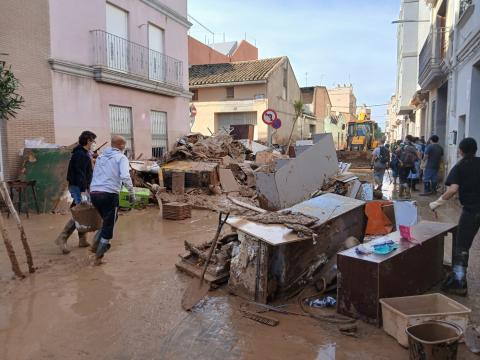
The European Economic and Social Committee (EESC) has welcomed the European Commission’s new EU Preparedness Union Strategy, calling it a long-overdue shift to an all-hazards, whole-of-government and whole-of-society
approach to crises ranging from wildfires and floods to cyberattacks and full-scale armed aggression. But the EESC warned that the plan must come with clear, long-term financing and a real role for organised civil society to succeed.
At its plenary debate with civil defence and humanitarian experts on 18 September, the EESC stressed that solidarity, public trust and social unity are just as vital as new rules and tools. After the debate, the EESC adopted its opinion on the Strategy for which Ariane Rodert, Vice-President of the Civil Society Organisations’ Group since 21 October, was one of the rapporteurs.
Several members of the EESC’s Civil Society Organisations’ Group took the floor during the plenary debate:
Ms Rodert opened the debate by affirming that the EESC welcomes the Preparedness Union Strategy.
She stated that true resilience means investing in an empowered civil society, defending our common values and fundamental rights, as well as fostering social cohesion and inclusion – so no one is left behind.
Pietro Vittorio Barbieri, vice-president of the Group, affirmed that across Europe, emergency preparedness is omnipresent. Our unpreparedness is undeniable. Time to change the Latin motto: if you want peace, prepare for peace.
Corina Murafa Benga strongly stated that crises are the new normal. We need civil society at the core, integrated climate resilience, and long-term and holistic EU funding – not ad hoc fixers.
Krzysztof Stanislaw Balon, vice-president of the Group, urged members to also think of civil duties which are equally important for preparedness. He recommended that Member States introduce a compulsory service for young people either in the armed forces or in social and health services provided by civil society organisations or social economy entities. This would allow for better preparedness.
Simo Tiainen, vice-president of the Group during the EESC's term 2020-2025, asserted that the importance of preparedness is becoming greater in this insecure world. He said that crises do not end at the borders of countries, and therefore we need cross-border collaboration at EU level to tackle them.
Read the EESC’s press release: https://www.eesc.europa.eu/en/news-media/news/eesc-backs-eu-preparedness-union-strategy-warns-fund-it-leave-no-one-behind
Watch the debate at: https://www.europarl.europa.eu/streaming/?event=20250918-0900-SPECIAL-OTHER
Article co-authored with EESC press service