The EESC supports the Action Plan for a Maritime Strategy in the Atlantic area, which sets out priorities for research and investment in the region and provides considerable European added value in terms of boosting blue growth under the Europe 2020 strategy. Cooperation will develop within this strategic framework between authorities and social and economic operators in the Atlantic regions of the five Member States concerned: Ireland, the United Kingdom, France, Spain and Portugal.
Download — Action Plan for a Maritime Strategy in the Atlantic area
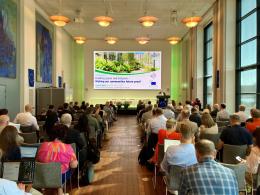
Reimagining the design of cities, communities and housing is essential to face the current challenges. Civil society organisations have a key role to play in steering this transformation. Sustainability and the right to housing must be at the heart of future strategies. The EU could contribute to this by increasing European funding for affordable housing and supporting the social economy.
Conference of the EESC Civil Society Organisations' Group in the framework of the Danish Presidency of the Council of the European Union, Copenhagen, Danish Society of Engineers (IDA), 2 July 2025
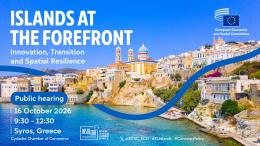
As part of the preparation of the EESC opinion on an EU Strategy for Islands, the European Economic and Social Committee, in cooperation with INSULEUR, will hold a public hearing in Syros, at the heart of the Cyclades. The hearing aims to bring together local and regional authorities, organised civil society, businesses, academia and citizens to exchange views on both the challenges and the untapped opportunities facing Europe's islands. Beyond discussing issues such as connectivity, demographic change, access to services and climate resilience, the event will highlight the unique assets of islands like Syros, including their strategic location, cultural heritage, blue economy potential, innovation capacity, renewable energy opportunities and sustainable tourism. The insights gathered will contribute directly to the EESC opinion by ensuring that the voices, experiences and aspirations of island communities are reflected in future EU policies and in the implementation of the first European Strategy for Islands which was adopted in June 2026.
rue Belliard 101, Jacques Delors building, room JDE 63, 9:30-11:00
Brussels
Belgium
EESC, room JDE 63, 9:30-11:00
The policy debate brings together stakeholders to assess how National and Regional and Partnership Plans will work in practice. In a workshop setting connected to the European Economic and Social Committee, participants from civil society, social partners and institutions will exchange perspectives on transparency, inclusiveness and impact. The discussion aims to highlight gaps, share best practices and strengthen the role of organised civil society in shaping and monitoring the implementation of NRPPs in the EU.
The debate of the EESC on “Strong regions for a safe Europe:Resilience and growth of EU Eastern border regions” will focus on the strategic importance of strengthening resilience and fostering sustainable growth in the European Union’s eastern border regions.