
European Economic
and Social Committee
Battery production in Europe needs a real boost
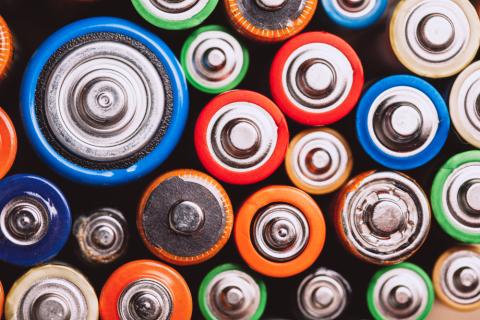
At the March Plenary, the European Economic and Social Committee (EESC) adopted an opinion on the European Commission's Battery Booster Strategy. While supporting the initiative's mission to strengthen the European battery value chain, the EESC calls for clearer prioritization, stronger implementation tools, a broader scope beyond electric vehicle batteries, and higher environmental and social standards.
The Battery Booster Strategy is a comprehensive framework, designed to make Europe's battery ecosystem more competitive, resilient, and sustainable. It tackles the intensifying global competition, rising production costs, and persistent strategic dependencies. Through linking investment, supply chain security, innovation, and demand, the strategy aims to drive the transition towards clean mobility and climate neutrality.
The strategy mobilizes a total of EUR 1.8 billion. EUR 1.5 billion is allocated to the Battery Booster Facility, offering interest-free loans to European battery cell producers during the ramp-up phase. Another EUR 300 million supports the upscaling of the production of raw materials to strengthen the supply chain.
The EESC opinion supports the Commission's effort to strengthen the EU battery sector but expands on the proposal by including civil society recommendations calling for more credible, longer-term financing. It maintains that current measures need stronger implementation tools and a more holistic approach.
Opinion Rapporteur Jason Deguara states: “The Battery Booster Strategy is a step in the right direction but delivering a real impact means going further. We need a ‘Made in Europe’ battery ecosystem across the full value chain, supported by reinforced funding and guided by high social and environmental standards.”
A call for credible and long-term financing
The EESC argues that genuine 'booster' effects require stronger, better-targeted EU financing, attesting that the current package is modest compared to what is needed to accelerate gigafactory deployment and close gaps with global competitors. To create reliable demand signals across the value chain, the EESC urges Member States and the Commission to reinforce funding, especially through the next multiannual financial framework.
The Committee moreover calls for a policy framework that requires foreign investment to follow measures on governance, technology sharing, workforce skills and supply chain integration. It is further evident that targeted support for small and medium-sized enterprises is fundamental, as they supply vital machinery, robotics, and recycling solutions needed for a resilient value chain.
Social and environmental standards
The opinion stresses that ‘Made in Europe’ must not only mean high-quality products, but also robust social and environmental standards. Therefore, implementation plans should be developed with stakeholders, including social partners. Cost and administrative burden reductions cannot come at the expense of labour or safety standards. Consequently, robust enforcement mechanisms must accompany any simplification.
With substantial employment generation potential, the EESC demands that public funding be conditional on quality employment and full compliance with EU standards. It is essential, that social and employment impacts are transparently monitored, especially when the Strategy drives the rapid scaling of gigafactories.
Moreover, green jobs in recycling and circular economy solutions should be supported in order to reduce dependencies, while simultaneously advancing skilled employment. Public investment must safeguard Europe’s industrial leadership, ensuring equal regulatory enforcement for all market participants, including for non-EU operators active on the European market.
Innovation and technology
Recognising innovation as a cornerstone of the Strategy, the EESC calls for continued technological progress to enhance battery performance, sustainability, and cost efficiency. Particularly, the Committee advocates expanding funding to include non-lithium chemistries, such as sodium batteries, as strategic complements to lithium batteries.
The EESC also supports the advancement of digitalisation and manufacturing technologies to optimise efficiency. Crucially, innovation must improve sustainability and safety without increasing administrative burdens, ensuring that technological progress aligns with industrial goals, decent work, and long-term competitiveness.
The opinion's Co-Rapporteur Marco Mensink emphasizes the urgency: "The key message of this report is that battery production in Europe needs a real boost. A real booster package requires stronger and long-term support through the MFF, decisive action on recycling to keep critical materials in Europe, and measures to boost demand and scale production to create high quality jobs in Europe. In other words, we need to go all-in."
Recommended for you
EU:n ja Yhdysvaltojen kauppa- ja teknologianeuvoston on tartuttava tilaisuuteen ja otettava tavoitteeksi johtoasema kaupan, teknologian ja innovoinnin alalla
News
Euroopan talous- ja sosiaalikomitea (ETSK) totesi heinäkuun täysistunnossaan, että uudesta kauppa- ja teknologianeuvostosta (Trade and Technology Council, TTC) voi tulla sekä EU:ta että Yhdysvaltoja…
”Sinun Eurooppasi, sinun mielipiteesi” ‑tapahtuma 2023: Nuoret vaativat avoimempaa, digitaalisempaa ja yksinkertaisempaa EU:ta
News
Euroopan talous- ja sosiaalikomitea (ETSK) isännöi 23.–24. maaliskuuta 14. ”Sinun Eurooppasi, sinun mielipiteesi” -tapahtumaa, joka toi Brysseliin 105 opiskelijaa 35 koulusta EU:n 27 jäsenvaltiosta…
Puurakentaminen voi auttaa vähentämään hiilidioksidipäästöjä
News
Euroopan talous- ja sosiaalikomitean järjestämässä keskustelussa kävi ilmi, kuinka hyödyllistä puurakentaminen voi olla, kun EU pyrkii saavuttamaan hiilineutraaliuden tavoitteen vuoteen 2050 mennessä…
Pro Lapinlahti -yhdistykselle ja Lilinkotisäätiölle ETSK:n mielenterveysaiheinen kansalaisyhteiskuntapalkinto
News
Suomalaisorganisaatiot jakoivat mielenterveyttä edistäville hankkeille myönnetyn Euroopan talous- ja sosiaalikomitean (ETSK) kansalaisyhteiskuntapalkinnon muut palkintosijat kahden muun hakijan…
Euroopan talous- ja sosiaalikomitea on avannut mielenterveysaiheisen kansalaisyhteiskuntapalkintonsa haun
News
Kansalaisyhteiskunnan organisaatiot, yksityishenkilöt ja yksityiset yritykset voivat nyt ehdottaa voittoa tavoittelemattomia hankkeitaan tätä eurooppalaisten henkisen hyvinvoinnin tukemiselle…