
European Economic
and Social Committee
Battery production in Europe needs a real boost
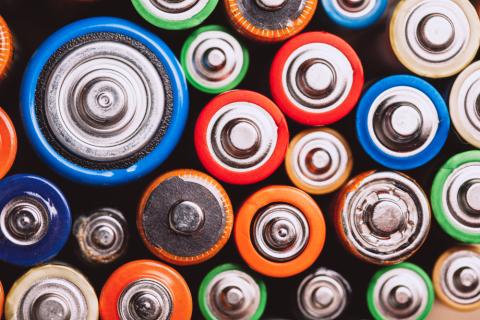
At the March Plenary, the European Economic and Social Committee (EESC) adopted an opinion on the European Commission's Battery Booster Strategy. While supporting the initiative's mission to strengthen the European battery value chain, the EESC calls for clearer prioritization, stronger implementation tools, a broader scope beyond electric vehicle batteries, and higher environmental and social standards.
The Battery Booster Strategy is a comprehensive framework, designed to make Europe's battery ecosystem more competitive, resilient, and sustainable. It tackles the intensifying global competition, rising production costs, and persistent strategic dependencies. Through linking investment, supply chain security, innovation, and demand, the strategy aims to drive the transition towards clean mobility and climate neutrality.
The strategy mobilizes a total of EUR 1.8 billion. EUR 1.5 billion is allocated to the Battery Booster Facility, offering interest-free loans to European battery cell producers during the ramp-up phase. Another EUR 300 million supports the upscaling of the production of raw materials to strengthen the supply chain.
The EESC opinion supports the Commission's effort to strengthen the EU battery sector but expands on the proposal by including civil society recommendations calling for more credible, longer-term financing. It maintains that current measures need stronger implementation tools and a more holistic approach.
Opinion Rapporteur Jason Deguara states: “The Battery Booster Strategy is a step in the right direction but delivering a real impact means going further. We need a ‘Made in Europe’ battery ecosystem across the full value chain, supported by reinforced funding and guided by high social and environmental standards.”
A call for credible and long-term financing
The EESC argues that genuine 'booster' effects require stronger, better-targeted EU financing, attesting that the current package is modest compared to what is needed to accelerate gigafactory deployment and close gaps with global competitors. To create reliable demand signals across the value chain, the EESC urges Member States and the Commission to reinforce funding, especially through the next multiannual financial framework.
The Committee moreover calls for a policy framework that requires foreign investment to follow measures on governance, technology sharing, workforce skills and supply chain integration. It is further evident that targeted support for small and medium-sized enterprises is fundamental, as they supply vital machinery, robotics, and recycling solutions needed for a resilient value chain.
Social and environmental standards
The opinion stresses that ‘Made in Europe’ must not only mean high-quality products, but also robust social and environmental standards. Therefore, implementation plans should be developed with stakeholders, including social partners. Cost and administrative burden reductions cannot come at the expense of labour or safety standards. Consequently, robust enforcement mechanisms must accompany any simplification.
With substantial employment generation potential, the EESC demands that public funding be conditional on quality employment and full compliance with EU standards. It is essential, that social and employment impacts are transparently monitored, especially when the Strategy drives the rapid scaling of gigafactories.
Moreover, green jobs in recycling and circular economy solutions should be supported in order to reduce dependencies, while simultaneously advancing skilled employment. Public investment must safeguard Europe’s industrial leadership, ensuring equal regulatory enforcement for all market participants, including for non-EU operators active on the European market.
Innovation and technology
Recognising innovation as a cornerstone of the Strategy, the EESC calls for continued technological progress to enhance battery performance, sustainability, and cost efficiency. Particularly, the Committee advocates expanding funding to include non-lithium chemistries, such as sodium batteries, as strategic complements to lithium batteries.
The EESC also supports the advancement of digitalisation and manufacturing technologies to optimise efficiency. Crucially, innovation must improve sustainability and safety without increasing administrative burdens, ensuring that technological progress aligns with industrial goals, decent work, and long-term competitiveness.
The opinion's Co-Rapporteur Marco Mensink emphasizes the urgency: "The key message of this report is that battery production in Europe needs a real boost. A real booster package requires stronger and long-term support through the MFF, decisive action on recycling to keep critical materials in Europe, and measures to boost demand and scale production to create high quality jobs in Europe. In other words, we need to go all-in."
Recommended for you
Az egészségügyi ágazatbeli közszolgáltatások közös létrehozása erősíteni fogja a demokrácia részvételi jellegét az EU-ban
News
Az Európai Gazdasági és Szociális Bizottság (EGSZB) és a Debreceni Egyetem által szervezett rendezvény rávilágított, mennyire fontos az általános érdekű szolgáltatások közös létrehozása az…
YEYS! 2023: A fiatalok átláthatóbb, digitalizált és egyszerűbb EU-t szeretnének
News
Március 23-án és 24-én az Európai Gazdasági és Szociális Bizottság (EGSZB) immár 14. alkalommal adott otthont a „Your Europe, Your Say!” (A Te Európád, a Te szavad! – YEYS!) című rendezvénynek. Erre…
Az EGSZB megnyitja a jelentkezést civil társadalmi díjára, melynek témája a mentális egészség
News
Civil társadalmi szervezetek, magánszemélyek és magánvállalkozások mostantól nevezhetik nonprofit projektjeiket az európai polgárok mentális jólétének támogatásának szentelt EGSZB-díjra. Az Európai…
Az EGSZB felhívása: 2024 júniusában szavazzunk egy egységes és demokratikus Európai Unióra!
News
A demokrácia világszerte hanyatlik, a növekvő infláció és a háború fenyegető veszélye közepette a dezinformáció térnyerése és egyre nagyobb elégedetlenség tapasztalható. Nagy tehát a tétje az új…
Az Európai Gazdasági és Szociális Bizottság készen áll arra, hogy együttműködjön az EU Tanácsának magyar elnökségével
News
Az Európai Gazdasági és Szociális Bizottság (EGSZB) júliusi plenáris ülésén Oliver Röpke EGSZB-elnök vitát tartott Bóka János európai uniós ügyekért felelős miniszterrel, aki ismertette az EU Tanácsa…