
European Economic
and Social Committee
EESC President Röpke Calls for Social Justice and Rights-Based Approach to AI and Migrants' Integration at EPSCO in Warsaw
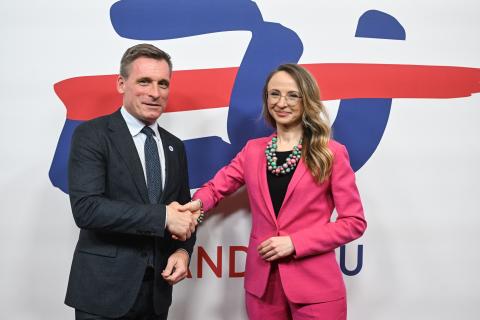
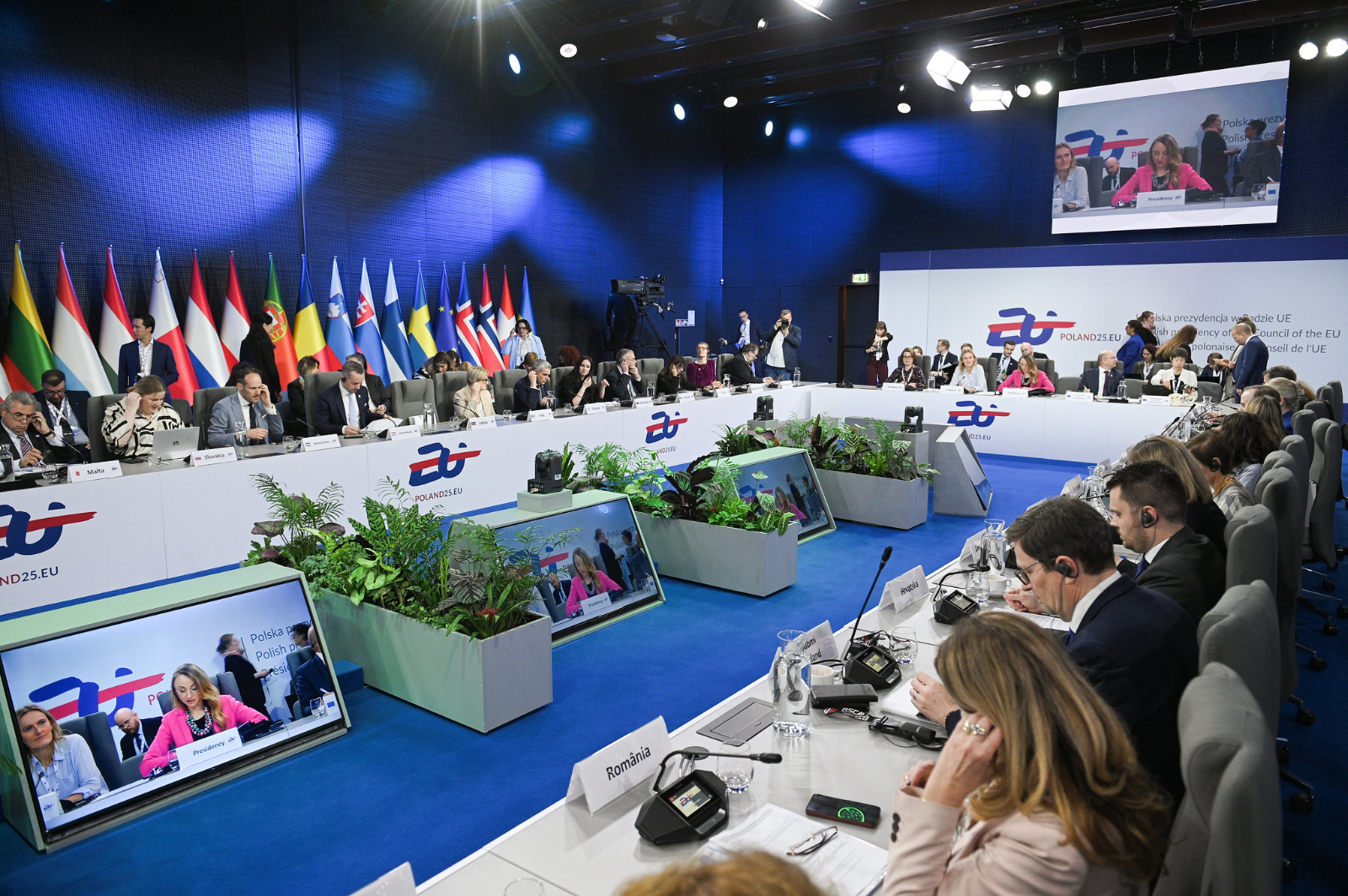
At the Informal EPSCO Social Policy Council held this week in Warsaw, European Economic and Social Committee (EESC) President Röpke made a strong political call for Europe to deliver on its promises of fairness, dignity and rights in the digital and demographic transitions. The two-day event, hosted by the Polish Presidency and Minister Dziemianowicz-Bąk, convened EU ministers for Employment and Social Affairs, social partners, and institutional leaders, including Executive Vice-President Mînzatu.
AI Must Empower People – Not Displace Them
In the high-level debate on the role of artificial intelligence (AI) in the world of work, President Röpke warned of the growing risks of algorithmic control, workplace surveillance, and deepening inequalities.
“AI cannot be governed by market forces alone. We need clear political choices. It is time to move from principles to action—to ensure workers are protected, consulted, and empowered,” he declared.
Presenting the EESC’s recent opinions on Pro-worker AI and AI and Health and Safety at Work, both topics requested by the Polish Presidency, President Röpke urged EU institutions to plug the legal gaps in AI governance and make social dialogue a legal requirement in digital transitions.
“Workers must be in the room when decisions about AI are made. Without trust and participation, the digital transition will fail. Europe must set the global standard for ethical, human-centred innovation,” he added.
Integration Must Be Fair, Fast, and Funded
Addressing ministers during the plenary on active integration policy, President Röpke argued that migration must be recognised as a structural necessity for Europe—not just a temporary challenge.
“Demographic change, skills shortages, and labour market gaps mean we need migration. But for it to succeed, we need more than slogans—we need investment, inclusion, and political courage”, he said.
He reiterated the EESC’s demand for a two-way integration approach, including fast and fair procedures, recognition of qualifications, and robust support for both migrants and host communities.
“The cost of non-integration is high—socially, economically, and politically. We must act now to avoid storing up problems for the future. A fair integration policy is not charity—it is smart politics”, he said.
Bilateral Engagements with Key Ministers
Alongside his interventions in plenary, President Röpke held a series of high-level bilateral meetings. His exchange with Austrian Federal Minister Schumann focused on how to align national and European strategies to safeguard workers’ rights in the digital age and advance gender equality in labour markets.
He also conferred with EVP Mînzatu, discussing the implementation of the European Pillar of Social Rights and the need for a social rulebook for digitalisation. In a talk with French Minister of Labour and Employment Panosyan-Bouvet, President Röpke followed up on the outcomes of the AI Action Summit hosted by France earlier this year, highlighting the need to translate international commitments on ethical AI into concrete EU-wide legislation and workplace protections.
Putting Civil Society at the Centre
Reflecting on the EPSCO discussions, President Röpke emphasised the EESC’s unique role in bridging EU institutions with grassroots realities:
“Civil society is not a stakeholder—it is a political actor. At the EESC, we make sure that Europe’s social model is defended not only in theory, but in practice, with the people who make it work every day,” he concluded.
As the EU prepares for the next phase of legislative work on AI and integration, the EESC reaffirmed its commitment to shaping policies that are not only efficient, but democratic, inclusive, and rights-based.

Recommended for you
Skrajni čas za vlaganje v mlade na Zahodnem Balkanu
News
Da bi vlade držav Zahodnega Balkana svojim državljanom zagotovile boljšo prihodnost, se morajo lotiti reševanja težav, s katerimi se srečujejo mladi, ki imajo ključno vlogo pri njenem ustvarjanju.…
Vaša Evropa, vaš glas! v letu 2023: Mladi si želijo, da bi bila EU preglednejša, bolj digitalna in enostavnejša
News
Evropski ekonomsko-socialni odbor (EESO) je 23. in 24. marca gostil dogodek Vaša Evropa, vaš glas! Potekal je v Bruslju, udeležilo pa se ga je 105 dijakov 35 šol iz vseh 27 držav članic EU in sedem…
Začetek zbiranja prijav za nagrade za civilno družbo EESO na temo duševnega zdravja
News
Organizacije civilne družbe, posamezniki in zasebna podjetja lahko svoje nepridobitne projekte prijavijo za nagrado EESO, namenjeno spodbujanju duševnega zdravja Evropejcev Evropski ekonomsko…
Oddajte svoj glas junija 2024: EESO poziva Evropejce, naj volijo za enotno in demokratično Evropo
News
Demokracija po vsem svetu nazaduje, širijo se dezinformacije in vse več je nezadovoljstva zaradi naraščajoče inflacije ter preteče nevarnosti vojne, zato so letošnje evropske volitve, na katerih bodo…
Ohranjanje zagona širitve EU: prizadevanje civilne družbe, da bi s postopnim vključevanjem prinesla koristi Zahodnemu Balkanu
News
Evropski ekonomsko-socialni odbor (EESO) je 20 let po pristopu Slovenije k EU v Ljubljani zbral politične voditelje in voditelje civilne družbe, da bi obeležili to simbolično obletnico in poudarili…