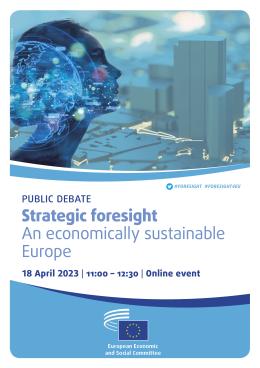
With this debate, the ECO section is providing ex-ante input to the European Commission, in preparation for the upcoming 2023 strategic foresight cycle that wants to shed light on the strategic decisions needed to ensure a socially and economically sustainable Europe with a stronger role in the world in the coming decades.
One of the main conclusions of the 8th Cohesion Report is that although cohesion and convergence among regions in the European Union has improved, there are still remaining gaps especially in less developed regions related with their territorial characteristics. EU islands, mountain areas and sparsely populated areas still face many challenges on their growth and income and disparities exist.
In these regions, there are still a lot of gaps in terms of employment and investment, social exclusion is evident and gender disparities have not diminished.
Download format:
Download — Opinjoni tal-KESE: Main challenges faced by EU islands, and mountainous and sparsely populated areas
The EU's Global Gateway initiative is the right step forward in improving connectivity with non-EU partners and like-minded developing countries. In its relevant opinion, the European Economic and Social Committee (EESC) underlines that civil society representatives must be included on the board that will be set up to coordinate Global Gateway investments. It also stresses that the eligibility of Global Gateway projects must be linked to the EU's values and principles.
The communication presents a vision, targets and avenues for a successful digital transformation of Europe by 2030. It proposes to agree on a set of digital principles, to rapidly launch important multi-country projects, and to prepare a legislative proposal setting out a robust governance framework, to monitor progress – the Digital Compass.
Download format:
Download — Opinjoni tal-KESE: Europe’s Digital Decade: 2030 Digital Targets
The EESC strongly supports the Commission's proposal – Next Generation EU – as a specific tool for a quick and effective recovery.
The EESC takes a very positive view of the Commission's two main decisions:
to introduce an extraordinary financial recovery instrument as part of the multiannual financial framework
to raise common debt, which will be repaid over a long period of time, and prevent the extraordinary financial burden from falling directly on the Member States in the short run.
The EESC strongly welcomes the fact that the newly proposed instrument should be closely coordinated with the European Semester process, and furthermore welcomes the Commission's proposal to introduce additional genuine own resources based on different taxes (revenues from the EU Emissions Trading System, digital taxation, large companies' revenues).
Download format:
Download — Opinjoni tal-KESE: Recovery plan for Europe and the Multiannual Financial Framework 2021-2027