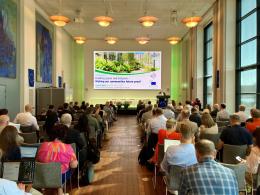
Reimagining the design of cities, communities and housing is essential to face the current challenges. Civil society organisations have a key role to play in steering this transformation. Sustainability and the right to housing must be at the heart of future strategies. The EU could contribute to this by increasing European funding for affordable housing and supporting the social economy.
Members on the future of housing and public spaces in the EU
Guest articles by Laura KLITGAARD (The Danish Society of Engineers - IDA), Signe HELLEDI (Cycle Superhighways), Nils Thor ROSTED (Amager Resource Centre), and Gustavo GHIDINI (Movimento Consumatori)
Interview with rapporteur Elena-Alexandra CALISTRU on Measures for a resilient, cohesive and inclusive European economy (EESC opinion ECO/661)
At the initiative of the EESC’s Civil Society Organisations’ Group, this exhibition showcased projects that have been coordinated by the Danish architecture firm BIG-Bjarke Ingels Group.
The objective of the public hearing is to examine how cohesion policy can more effectively address housing affordability challenges to advance its core goals of economic, social and territorial cohesion. The participants will explore how strategic housing investments can stimulate regional economic development, enhance competitiveness, improve labour market efficiency, and reduce territorial disparities. The aim is to provide concrete recommendations for improving the effectiveness of existing instruments for the remainder of the 2021-2027 period and developing a more comprehensive approach to affordable housing within the post-2027 cohesion policy framework.
This study explores policy solutions for affordable and sustainable housing in the European Union, emphasising a number of factors which are crucial throughout the building process: habitability, community, economic accessibility, resource efficiency, circularity and climate change resilience.