
European Economic
and Social Committee
A new bridge unfolds between young Europeans on both sides of the Channel
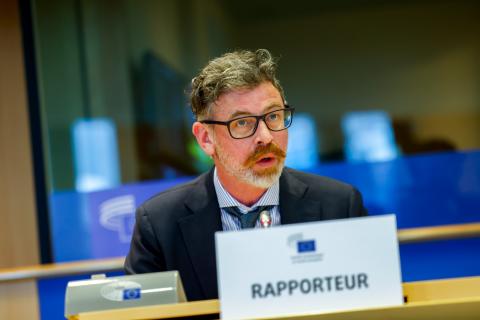
Strengthening ties between young people and youth organisations in the European Union and the United Kingdom will have tangible positive effects on a generation of Europeans disproportionately affected by the consequences of Brexit, according to the European Economic and Social Committee (EESC).
The EESC highlights the fact that ‘post-Brexit changes to arrangements for mobility between the UK and the EU have had a disproportionately significant impact on younger people both in the EU and in the UK, especially in the area of education and science’.
Recognising the disruption and changes brought about by the UK’s withdrawal from the EU, the opinion on EU-UK youth engagement, adopted at the EESC’s April plenary, points out that mobility restrictions have had ‘the most significant impact on young people, including workers and professionals in the early stages of their careers, as well as students across different educational levels’.
It sets out several initiatives that aim to promote youth engagement, dynamic cooperation and structured dialogue. As EESC member and the opinion’s author Cillian Lohan put it, ‘strategic approaches will bear fruit’.
Reciprocity for maximum benefits
The EESC is urging the European Commission to propose and negotiate a comprehensive and ambitious reciprocal youth mobility partnership, with the aim of establishing a clear framework for mobility in research, education, training and youth exchanges.
Within this overall approach, the opinion urges the Commission to pursue negotiations with the UK for the full reintegration of the UK into Erasmus+ - a position officially backed by the European Youth Forum and the British Youth Council.
More generally, the EESC also recommends building capacity to educate young people in the EU and the UK on practical, mutually available opportunities. Clear career pathways should be articulated, with a need to deliver expert knowledge to young people through schools, cooperatives and career advice.
Robust structures of cooperation
The opinion champions the development of a structured engagement between the EU, UK-level authorities and the UK devolved nations, with the robust involvement of youth, including youth work and non-formal learning, to strengthen youth civil society dialogue and cooperation.
As part of this emphasis, the EESC wants to see proactive engagement with the UK to address the mobility barriers of creative professionals, possibly including a reciprocal visa waiver for creative industries or a ‘cultural exemption’ from the EU-UK Trade and Cooperation Agreement.
Promoting peace and dialogue
Championing an issue close to his heart as an EESC member from Ireland, Mr Lohan makes the most of this opinion to foster dialogue between the UK and Irish governments and the Northern Ireland Executive to highlight the work of the cross-border PEACE PLUS programme designed to support peace and prosperity across Northern Ireland and the border counties of Ireland.
‘The spirit of the opinion goes hand in hand with the preceding debate on democracy and multilateralism, highlighting the importance of re-establishing and nurturing educational, cultural and social exchanges between young Europeans in the EU and the UK, who will no doubt be the architects of our common future’, Mr Lohan said.
Work organisation
Downloads
-
A new bridge unfolds between young Europeans on both sides of the Channel
Recommended for you
Il-KESE jappella għal regolamentazzjoni b’saħħitha u ssemplifikata tal-kriptoassi
News
Il-Kumitat Ekonomiku u Soċjali Ewropew jappoġġja żieda fir-regolamentazzjoni tal-kriptoassi, b’regoli robusti u koerenti biex l-investituri fl-UE jiġu protetti aħjar, f’konformità mal-miżuri attwali…
L-istrumentalizzazzjoni tal-migranti u l-kriżi tar-refuġjati tal-Ukrajna jappellaw għal bidu ġdid għall-politika dwar il-migrazzjoni
News
L-istrumentalizzazzjoni tal-migranti sostnuta mill-Istat, li għandha l-għan li tiddestabbilizza lill-UE, u l-gwerra attwali fl-Ukrajna, li wasslet għal influss bla preċedent ta’ refuġjati, jagħmluha…
“L-Ewropa Tiegħek, Leħnek” 2023: Iż-żgħażagħ jitolbu UE aktar trasparenti, diġitali u semplifikata
News
Fit-23 u l-24 ta’ Marzu, il-Kumitat Ekonomiku u Soċjali Ewropew (KESE) ospita l-14-il avveniment L-Ewropa Tiegħek, Leħnek!, li laqqa’ fi Brussell 105 studenti minn 35 skola mis-27 Stat Membru tal-UE…
Euro-Med – L-organizzazzjonijiet tas-soċjetà ċivili huma essenzjali biex l-ekonomija u s-soċjetà jaħdmu tajjeb
News
Matul is-sessjoni plenarja ta’ Diċembru tal-Kumitat Ekonomiku u Soċjali Ewropew (KESE) sar dibattitu dwar ir-rikostruzzjoni u r-reżiljenza tar-reġjun Ewro‑Mediterranju wara l-pandemija tal-COVID-19.…
Il-KESE jiftaħ l-applikazzjonijiet għall-Premju tiegħu għas-Soċjetà Ċivili li se jkun qed jindirizza s-saħħa mentali
News
L-organizzazzjonijiet tas-soċjetà ċivili, l-individwi u l-kumpaniji privati issa jistgħu jdaħħlu l-proġetti tagħhom mingħajr skop ta’ qligħ għall-premju tal-KESE ddedikat għall-appoġġ tal-benesseri…