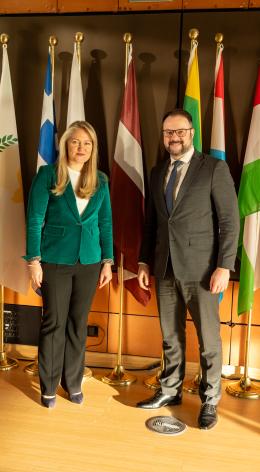
The legitimate interests of the EU in the European Arctic will best be defended together through an EU Arctic strategy that strengthens civil society participation in all relevant decisions. Close cooperation with Greenland is also vital for sustainable investment in the Arctic in order to ensure the regions' prosperity and resilience.
The EU needs a sharper focus on competition policy to strengthen its global competitiveness, boost productivity and ensure the single market remains a pillar of economic strength, according to the EESC.
The European Economic and Social Committee (EESC) has called for changes to the European Union’s State aid rules in order to recognise and better accommodate the needs of social economy entities, which play a critical role in tackling societal challenges.
The euro area is facing pressing challenges: low labour productivity, weakening competitiveness, and slowing economic momentum compared to global peers like the United States. To reverse this trend, the European Economic and Social Committee (EESC) is calling for an urgent and coordinated strategy. In a new opinion, the Committee outlines a plan to drive growth by deepening the internal market, cutting regulatory red tape, and ensuring fiscal sustainability. At the same time, policies must address transformative trends like artificial intelligence (AI) and the pressures of an ageing population.
In January's plenary session of the European Economic and Social Committee (EESC), leading voices from policymaking, academia, and civil society convened to discuss the urgent need for a fair and inclusive approach to climate and biodiversity action. As the EU accelerates its push toward climate neutrality, the EESC has issued a clarion call for a coordinated and inclusive transition.
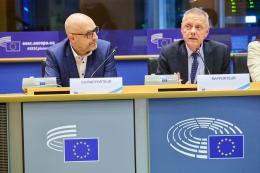
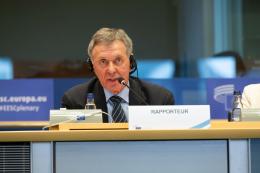
In its opinion issued in January, the European Economic and Social Committee (EESC) discusses the future of the electricity market and advocates a combined model of state measures and market mechanisms: government regulation where necessary and private entrepreneurship where possible.
In a debate hosted in Brussels by the European Economic and Social Committee (EESC), high-level speakers underlined the strategic importance of making comprehensive use of transport to step up the European Union’s ability to respond to present and future crises.
On 13 December 2024, the European Economic and Social Committee (EESC), the European Endowment for Democracy (EED) and Press Club Belarus jointly organised a seminar on the role of Belarusian independent media in fostering a resilient and democratising society. Being the only source of information for people in the country, Belarusian independent media need to be supported financially and be involved in partnerships with western media to keep Belarus high on the news agenda.
In an opinion adopted in plenary, the European Economic and Social Committee (EESC) has called for reforms to unlock the full potential of securitisation in the EU. By boosting investment and improving access to credit, the EESC aims to make securitisation a key tool in achieving the EU’s economic goals –especially its green transition and the completion of the Capital Markets Union.