
European Economic
and Social Committee
Concrete reforms and decisive steps needed for a resilient, competitive and inclusive economy
The euro area is facing pressing challenges: low labour productivity, weakening competitiveness, and slowing economic momentum compared to global peers like the United States. To reverse this trend, the European Economic and Social Committee (EESC) is calling for an urgent and coordinated strategy. In a new opinion, the Committee outlines a plan to drive growth by deepening the internal market, cutting regulatory red tape, and ensuring fiscal sustainability. At the same time, policies must address transformative trends like artificial intelligence (AI) and the pressures of an ageing population.
In recent years, the euro area has endured significant external shocks, including the COVID-19 pandemic and an energy crisis driven by geopolitical tensions. While stabilisation measures have been implemented at both EU and Member State levels, major challenges persist. Domestic uncertainty, unfavourable demographic trends, and rising demands on national budgets threaten economic stability.
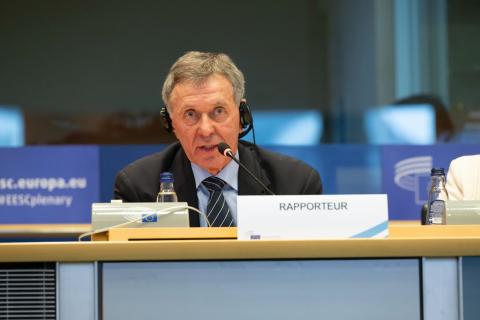
'These challenges demand bold, structural reforms – not just incremental changes,' says EESC rapporteur Juraj Sipko. 'We must act decisively to build long-term resilience and growth.'
A roadmap to competitiveness and productivity
Low levels of productivity and competitiveness have constrained growth in the euro area for years. To address this, the EESC recommends a three-step approach:
- Deepen the internal market: removing remaining barriers to cross-border trade and fostering innovation will create new opportunities for businesses and enhance economic efficiency.
- Coordinate industrial policy: Member States must work together to pool resources, boost synergies, and improve efficiency at the EU level to compete globally.
- Cut red tape: reducing excessive administrative and regulatory burdens will encourage entrepreneurship and attract investment, unlocking the euro area’s economic potential.
These steps are critical to keeping the euro area globally competitive and ensuring sustainable economic momentum.
Fiscal sustainability: a balancing act
As the euro area tackles the vast investment needs of the green transition, defence, and an ageing population, fiscal sustainability remains a top priority. The EESC advocates:
- a medium-term fiscal framework that balances sustainability with making the necessary financial resources available;
- closer collaboration between the Member States and the EU institutions to align fiscal policies and ensure collective resilience;
- leveraging untapped revenue, such as funds held in tax havens, while supporting global initiatives like the G20’s corporate tax framework.
Closing the investment gap
Compared to global peers like the United States, the euro area lags in investment. To bridge this gap, the EESC proposes:
- expanding venture capital to empower start-ups and support businesses scaling up;
- creating a favourable environment for innovation in green technologies and digital transformation, paving the way for sustainable, future-ready growth.
Building resilient labour markets
A strong labour market is essential to weather economic shocks. The EESC calls for reforms to:
- enhance flexibility while ensuring fair wage growth and productivity gains;
- strengthen social security systems to promote inclusion and guarantee access to essential services like housing;
- adapt to the rise of AI by equipping workers with the skills needed for a rapidly evolving job market.
Shared accountability for a sustainable future
Addressing systemic risks requires a unified response. The EESC emphasises shared accountability between the EU and the Member States, and calls for:
- enhanced dialogue and cooperation among policy-makers at all levels; and for
- strategies to be aligned to achieve sustainable economic growth and resilience.
The euro area stands at a pivotal moment. The EESC’s roadmap provides a clear, actionable strategy to tackle today’s challenges and create a resilient, competitive, and inclusive economy. With bold policies, strategic investments, and collaborative action, the euro area can overcome uncertainty and deliver lasting prosperity for generations to come.