
European Economic
and Social Committee
EESC calls for additional measures to boost EU capacities in advanced materials
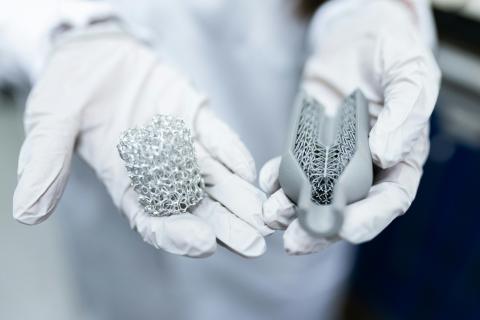
The European Economic and Social Committee (EESC) adopted an opinion on the European Commission’s Communication on Advanced Materials, urging a comprehensive strategy to boost the EU’s capacities in this critical sector. The EESC criticises the lack of funding, quantifiable targets, and sustainability indicators.
‘Advanced materials are important for industry and for economic growth and sustainability in the EU. We call for the establishment of sustainability indicators in all production processes. We must also secure the right skills and qualified labour necessary to develop these materials,’ said Anastasis Yiapanis, rapporteur for the opinion.
The Committee warns that the current Commission plan lacks the necessary ambition and specific targets to secure the bloc’s industrial leadership. A comprehensive overhaul is needed to foster a thriving ecosystem for innovation in advanced materials. Failure to act decisively, the EESC cautions, could have serious implications for the EU’s economic competitiveness and its ability to achieve its green and digital goals.
Co-rapporteur Gerardo Luis Arroyo Herranz added, ‘The Commission’s Communication cannot be seen as a strategy per se, as it lacks quantifiable targets, deadlines, and specific key performance indicators.’ The opinion emphasises the urgent need for a bold and strategic approach in order to position the EU as a global leader in advanced materials. The EESC also proposes including healthcare as an additional initial strategic area, as it represents one of Europe’s largest industries, with high emissions intensity and with healthcare-related advanced materials often intersecting with sectors such as electronics and energy.
Research, development, and skills
A central pillar of the EESC’s recommendations is the urgent need to transition towards a circular economy, reducing reliance on raw materials. To achieve this, the Committee calls for enhanced cooperation between industry, academia, and policy-makers, coupled with substantial investment in research and development and across the entire value chain.
The Committee also highlights the need for skills development and effective career guidance to attract talent to STEM careers. Mr Arroyo Herranz said, ‘Without adequately skilled people, any action that is implemented may be doomed to fail. For this reason, the EU must seriously implement up-skilling and re-skilling programmes for the current workforce, along with vocational education and training initiatives.’
Funding and strategic autonomy
The proposed EUR 250 million allocation for advanced materials under Horizon Europe is deemed insufficient by the EESC, which has called for more substantial funding and targeted support for SMEs. In particular, the Committee emphasises the need for tax-based incentives to stimulate investment and innovation, coupled with simplified bureaucratic processes, in order to foster innovation and collaboration.
Securing a stable supply of critical raw materials is another significant concern. The EESC advocates strengthening the EU’s domestic capacity through industrial policy measures and diversifying sources of critical raw materials. While recognising the importance of international collaboration, the EESC insists on a more proactive EU stance, including deeper partnerships with key players such as South Korea and the United States. Establishing long-term contracts with smaller countries is also recommended to mitigate potential supply disruptions.
Work organisation
Recommended for you
EU:n ja Yhdysvaltojen kauppa- ja teknologianeuvoston on tartuttava tilaisuuteen ja otettava tavoitteeksi johtoasema kaupan, teknologian ja innovoinnin alalla
News
Euroopan talous- ja sosiaalikomitea (ETSK) totesi heinäkuun täysistunnossaan, että uudesta kauppa- ja teknologianeuvostosta (Trade and Technology Council, TTC) voi tulla sekä EU:ta että Yhdysvaltoja…
”Sinun Eurooppasi, sinun mielipiteesi” ‑tapahtuma 2023: Nuoret vaativat avoimempaa, digitaalisempaa ja yksinkertaisempaa EU:ta
News
Euroopan talous- ja sosiaalikomitea (ETSK) isännöi 23.–24. maaliskuuta 14. ”Sinun Eurooppasi, sinun mielipiteesi” -tapahtumaa, joka toi Brysseliin 105 opiskelijaa 35 koulusta EU:n 27 jäsenvaltiosta…
Puurakentaminen voi auttaa vähentämään hiilidioksidipäästöjä
News
Euroopan talous- ja sosiaalikomitean järjestämässä keskustelussa kävi ilmi, kuinka hyödyllistä puurakentaminen voi olla, kun EU pyrkii saavuttamaan hiilineutraaliuden tavoitteen vuoteen 2050 mennessä…
Pro Lapinlahti -yhdistykselle ja Lilinkotisäätiölle ETSK:n mielenterveysaiheinen kansalaisyhteiskuntapalkinto
News
Suomalaisorganisaatiot jakoivat mielenterveyttä edistäville hankkeille myönnetyn Euroopan talous- ja sosiaalikomitean (ETSK) kansalaisyhteiskuntapalkinnon muut palkintosijat kahden muun hakijan…
Euroopan talous- ja sosiaalikomitea on avannut mielenterveysaiheisen kansalaisyhteiskuntapalkintonsa haun
News
Kansalaisyhteiskunnan organisaatiot, yksityishenkilöt ja yksityiset yritykset voivat nyt ehdottaa voittoa tavoittelemattomia hankkeitaan tätä eurooppalaisten henkisen hyvinvoinnin tukemiselle…