European Economic
and Social Committee
European Economic
and Social Committee
The European Economic and Social Committee (EESC) is the voice of organised civil society in Europe.
Find out more about its role and structure at http://www.eesc.europa.eu/en/about
The EESC issues between 160 and 190 opinions, evaluation and information reports a year.
It also organises several annual initiatives and events with a focus on civil society and citizens’ participation such as the Civil Society Prize, the Civil Society Days, the Your Europe, Your Say youth plenary and the ECI Day.
Find the latest EESC opinions and publications at http://www.eesc.europa.eu/en/our-work/opinions-information-reports/opinions and http://www.eesc.europa.eu/en/our-work/publications-other-work/publications respectively.
The EESC is active in a wide range of areas, from social affairs to economy, energy and sustainability.
Learn more about our policy areas and policy highlights at http://www.eesc.europa.eu/en/policies
The EESC holds nine plenary sessions per year. It also organises many conferences, public hearings and high-level debates related to its work.
Find out more about our upcoming events at http://www.eesc.europa.eu/en/agenda/our-events/upcoming-events
Here you can find news and information about the EESC'swork, including its social media accounts, the EESC Info newsletter, photo galleries and videos.
Read the latest EESC news http://www.eesc.europa.eu/en/news-media/news and press releases http://www.eesc.europa.eu/en/news-media/press-releases
The EESC brings together representatives from all areas of organised civil society, who give their independent advice on EU policies and legislation. The EESC's326 Members are organised into three groups: Employers, Workers and Various Interests.
Find out more about our Members and groups at http://www.eesc.europa.eu/en/members-groups
The EESC has six sections, specialising in concrete topics of relevance to the citizens of the European Union, ranging from social to economic affairs, energy, environment, external relations or the internal market.
Find out more at http://www.eesc.europa.eu/en/sections-other-bodies
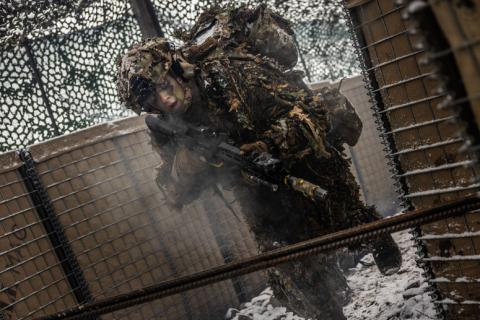
Iffaċċjata b’theddid għas-sigurtà li qed jiżdied, l-Ewropa teħtieġ b’mod urġenti strateġija unifikata ta’ finanzjament għad-difiża. Bi tweġiba għal talba mill-Presidenza Pollakka tal-UE li jmiss, il-KESE adotta Opinjoni li tappella għal azzjoni kuraġġuża: aktar investiment f’sistemi moderni, kooperazzjoni approfondita man-NATO, u finanzjament akbar fi ħdan il-qafas finanzjarju tal-UE.
Ir-riskji għas-sigurtà tal-Ewropa qed jiżdiedu, u dan jesponi d-dipendenza tagħha fuq fornituri esterni tad-difiża – 78 % tal-EUR 75 biljun minfuqa mill-pajjiżi tal-UE fuq l-akkwist tad-difiża fuq perjodu ta’ sena marru għand fornituri mhux tal-UE. It-tisħiħ tal-bażi industrijali u teknoloġika tad-difiża Ewropea (EDTIB) huwa kruċjali biex titnaqqas din id-dipendenza.
“Il-mekkaniżmi ta’ finanzjament tad-difiża tal-UE jridu jiġu riveduti biex jiġu indirizzati l-isfidi kontemporanji,” jispjega r-relatur tal-Opinjoni tal-KESE dwar Il-Finanzjament għad-Difiża fl-UE, Marcin Nowacki. “Ir-regoli baġitarji eżistenti jillimitaw l-infiq militari, u waqt li inizjattivi bħall-Fond Ewropew għad-Difiża (EDF) u l-Faċilità Ewropea għall-Paċi (EPF) jirrappreżentaw il-progress, dawn għadhom insuffiċjenti biex jindirizzaw l-iskala tat-theddid attwali.”
Il-kooperazzjoni tan-NATO hija essenzjali għall-interoperabbiltà u għal strateġija unifikata. L-akkwist konġunt, is-sħubijiet taċ-ċibersigurtà u tas-sigurtà spazjali, u l-proġett satellitari IRIS2 ser isaħħu r-reżiljenza. Il-finanzjament għad-difiża jrid ikun allinjat mal-prijoritajiet usa’ tal-UE mingħajr ma jikkomprometti l-għanijiet soċjali u ambjentali. L-investiment strateġiku, l-innovazzjoni u l-ippjanar fit-tul huma kruċjali biex jiġu żgurati s-sigurtà u l-awtonomija tal-Ewropa. (tk)