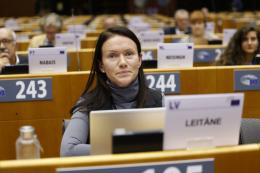
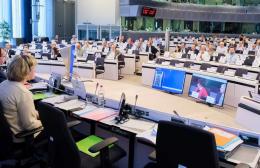
The European Economic and Social Committee (EESC) takes a firm stand on energy in an opinion adopted at its September plenary: the Commission's proposal is a step in the right direction to guarantee the EU's energy independence from Russia, but these emergency measures should not create new dependencies or harm the efforts to achieve climate neutrality as soon as possible.
In an opinion adopted at the September plenary, the European Economic and Social Committee (EESC) says that in order to achieve the energy transition and climate goals, massive public investment is needed. It proposes skimming the windfall profits and applying a "golden rule" to finance infrastructure investment.
During its September plenary session, the European Economic and Social Committee (EESC) adopted an own-initiative opinion on the EU Youth Test. For years, young people have demanded that their voices be heard in decision-making processes. With this opinion, the EESC becomes the first EU body to support their call for a mechanism to assess the impact of future legislation on youth.
In an own-initiative opinion, the European Economic and Social Committee (EESC) proposes creating a Climate Adjustment Fund (CAF) to ensure a rapid response to new climate and energy crises. The CAF would complement existing EU policies and ensure more effective use of existing funding.
The European Economic and Social Committee (EESC) calls on the European Commission to publish an overdue report to consider extending the EU's sustainability taxonomy's scope to social objectives.
Il-Kumitat Ekonomiku u Soċjali Ewropew jappoġġja żieda fir-regolamentazzjoni tal-kriptoassi, b’regoli robusti u koerenti biex l-investituri fl-UE jiġu protetti aħjar, f’konformità mal-miżuri attwali applikati għas-servizzi finanzjarji tradizzjonali.
EESC to host debate with Margaritis Schinas on the future of health care and health workers in the EU. And other highlights of the European Economic and Social Committee's September plenary.
Rare diseases may be rare but they still affect up to 36 million people in the EU. Despite advances in research and the exchange of good practices, Europe is still failing patients with rare diseases on many fronts
On 18 July, the European Economic and Social Committee (EESC) held a hearing on Communicating fundamental rights and the rule of law. Participants discussed how better communicating the EU's founding values could help address the challenges they face. The conclusions will feed into a future EESC opinion on the same topic.
To secure a more prosperous future for their citizens, Western Balkan governments need to address the problems encountered by young people, who hold the key to such a future. Sufficient and transparentbudget allocations for youth policy development and the inclusion of young people in the EU accession process are a prerequisite for facilitating positive changes and improving the situation of young people in the region.