The public hearing will examine how national, local and civil society actors will work together to foster collaboration through partnership principle and multi-level governance in order to deliver more inclusive, sustainable, and resilient outcomes across all regions.
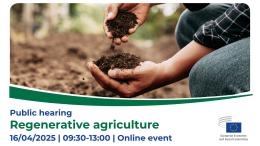
On 16 April 2025, the EESC will hold an online event on the role that regenerative agriculture can play in revitalising rural areas, improving soil health, and enhancing carbon sequestration to ensure long-term productivity and food security.
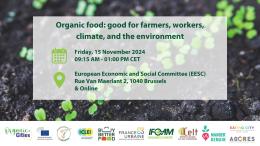
On 15 November the EESC will host a pivotal event focusing on the benefits of organic food and the critical role of public procurement in advancing sustainable practices. This event will bring together representatives from cities, national governments, and institutions to discuss the future of organic farming and its impact on farmers, workers, the climate, and the environment.
This public hearing aims to exchange views with civil society representatives from candidate countries and EU's stakeholders on the opportunities and challenges for the EU-agri-food sector with EU enlargement and to identify the contributions of the accession countries to the EU's social, environmental, and economic sustainability.
Conference on Professional Support for the EU Blue Deal
Location
Belliard street 99
Brussels and online
Belgium
On 7 May 2024, the Liberal Professions Category of the EESC proudly presented the 8th edition of the Day of Liberal Professions. Watch the recording of the event.
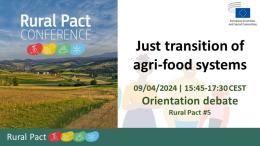
With this debate, the EESC wants to contribute to reflections on the foundations of a just transition framework on the agri-food sector to achieve a sustainable food system and move forward with concrete recommendations, for example, looking at the skills, capacity and mental support needed, or identifying some key policy areas and legal leverage points that could be triggered to start a just food transition for the EU.
Given the link between agriculture and rural areas and farmers with food production, the recommendations of this opinion will also have a positive impact on rural development.
The Civil Society Organisations' Group will hold a thematic debate on the Nature Restoration Law during its meeting on 20 March 2024, from 12:00 to 13:00. You can follow the debate live via the streaming on this event page.
On 6 November 2023, the EESC will host a public hearing in the context of its ongoing opinion on 'Promoting autonomous and sustainable food production: strategies for the Common Agricultural Policy (CAP) post-2027' requested by the upcoming Belgian Presidency of the Council of the EU.