European Economic
and Social Committee
European Economic
and Social Committee
The European Economic and Social Committee (EESC) is the voice of organised civil society in Europe.
Find out more about its role and structure at http://www.eesc.europa.eu/en/about
The EESC issues between 160 and 190 opinions, evaluation and information reports a year.
It also organises several annual initiatives and events with a focus on civil society and citizens’ participation such as the Civil Society Prize, the Civil Society Days, the Your Europe, Your Say youth plenary and the ECI Day.
Find the latest EESC opinions and publications at http://www.eesc.europa.eu/en/our-work/opinions-information-reports/opinions and http://www.eesc.europa.eu/en/our-work/publications-other-work/publications respectively.
The EESC is active in a wide range of areas, from social affairs to economy, energy and sustainability.
Learn more about our policy areas and policy highlights at http://www.eesc.europa.eu/en/policies
The EESC holds nine plenary sessions per year. It also organises many conferences, public hearings and high-level debates related to its work.
Find out more about our upcoming events at http://www.eesc.europa.eu/en/agenda/our-events/upcoming-events
Here you can find news and information about the EESC'swork, including its social media accounts, the EESC Info newsletter, photo galleries and videos.
Read the latest EESC news http://www.eesc.europa.eu/en/news-media/news and press releases http://www.eesc.europa.eu/en/news-media/press-releases
The EESC brings together representatives from all areas of organised civil society, who give their independent advice on EU policies and legislation. The EESC's326 Members are organised into three groups: Employers, Workers and Various Interests.
Find out more about our Members and groups at http://www.eesc.europa.eu/en/members-groups
The EESC has six sections, specialising in concrete topics of relevance to the citizens of the European Union, ranging from social to economic affairs, energy, environment, external relations or the internal market.
Find out more at http://www.eesc.europa.eu/en/sections-other-bodies
Zaļais kurss nav iespējams bez sociālā kursa
Materiālu sagatavojusi EESK Darba ņēmēju grupa
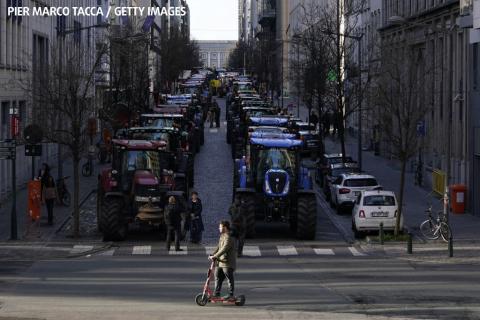
26. februārī lauksaimnieki un viņu traktori otro reizi dažās nedēļās protestējot bloķēja Briseles ielas. Eiropas kvartāla ielas krasā kontrastā ar ierastajiem uzvalkiem un sakoptām frizūrām pārņēma kravas automobiļi, traktori, siena un degošu riepu kaudzes. Sarežģītie iemesli lauksaimnieku protestiem ir dažādi – sākot ar KLP un vides politiku un beidzot ar pilnīgi nesaistītiem jautājumiem.
Patiesībā Eiropas lauki ir grūtā situācijā un tādā ir bijuši jau ilgu laiku. Darba ņēmēju grupa un EESK kopumā ir vairākkārt brīdinājušas, ka nebūs zaļā kursa bez sociālā kursa. Un, lai gan varētu būt kārdinājums to noraidīt kā vēl vienu Briseles žargona blakusproduktu, tā būtu nopietna kļūda. Lauki saskaras ar reālām problēmām, piemēram, starpnieki, kas ražotājiem maksā grašus, bet iekasē drausmīgas patēriņa cenas; nepietiekams atbalsts vides reformu veikšanai; un (netaisnīga) brīvā tirdzniecība, skarbi darba apstākļi un klimata pārmaiņas.
Eiropas Komisijas reakcija, steigā atsaucot prasības attiecībā uz pesticīdiem, ir vēl satraucošāka nekā pienācīgas apspriešanās un sociālo partneru iesaistes trūkums un bezdarbība sociālās politikas līmenī. Tāpat kā vides aizsardzības pasākumu gadījumā, atteikšanās no šiem pasākumiem varētu mūsu politiķiem dot nedaudz laika, taču tas mūs arī virzīs uz neatgriešanās punktu vides jomā.
Turklāt, tuvojoties vēlēšanām, galēji labējie cenšas izmantot neapmierinātību un zināmā mērā sekmīgi protestus pagriež pret IAM, zaļo kursu un Programmu 2030. gadam.