Țări implicate în procesul de aderare

This page is also available in:

CESE este implicat în mod activ în procesul de extindere a UE și a dezvoltat o dublă abordare – regională și bilaterală – pentru relațiile sale cu organizațiile societății civile (OSC) din țările implicate în procesul de aderare.

În ceea ce privește abordarea regională, Comitetul de monitorizare „Balcanii de Vest” – un organism intern permanent al CESE – este principalul instrument de coordonare a activităților CESE în regiune. Forumul societății civile din Balcanii de Vest, organizat din doi în doi ani, face parte din activitatea Comitetului de monitorizare.

De asemenea, CESE colaborează la nivel bilateral cu țări din Balcanii de Vest și cu Turcia. Pe baza acordurilor de asociere dintre aceste țări și UE, în vederea implicării OSC în procesele de preaderare și de aderare, CESE a creat trei organisme comune cu reprezentanții societății civile din Turcia, din Muntenegru și din Serbia. Fiecare organism este alcătuit dintr-un număr egal de membri din partea CESE și din partea țării partenere și se întrunește de două ori pe an.

CESE întreține contacte regulate și organizează activități comune cu OSC din țările implicate în procesul de aderare cu care încă nu a fost instituit niciun organism comun al reprezentanților societății civile.

Activitatea organismelor comune este completată de elaborarea avizelor CESE privind procesele de preaderare și de aderare ale fiecărei țări, precum și a unor avize pe teme de interes regional.

  • Event type
    Debate

    EU enlargement is a key priority for the European Economic and Social Committee (EESC). The Committee considers enlargement to be a geostrategic investment in a strong, stable, secure and united Europe, grounded in shared democratic values.

  • Reference number
    26/2026

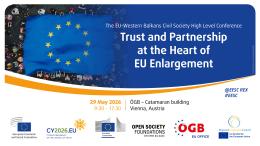
    A week ahead of the EU-Western Balkans summit, the European Economic and Social Committee held a conference in Vienna sending a clear message: civil society is essential for building trust between institutions and citizens and between the European Union and the region.

  • Event type
    JCC Meeting

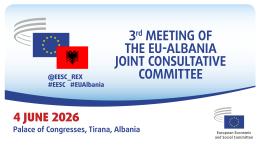
    The 3rd meeting of the EU–Albania Joint Consultative Committee (JCC) brought together representatives of organised civil society and social partners from Albania and the European Union to exchange views on Albania’s accession process.

  • Trust and Partnership at the Heart of EU Enlargement
    Event type
    Conference

    On 29 May 2026, the European Economic and Social Committee (EESC) organised a High‑Level Civil Society Conference that brought together EU and Western Balkans stakeholders to discuss the role of civil society in advancing EU enlargement, strengthening democratic resilience and supporting socio‑economic convergence in the region.

  • Event type
    JCC Meeting

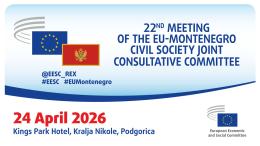
    The 22nd meeting of the EU–Montenegro Joint Consultative Committee (JCC) was hold in Podgorica. The meeting brought together representatives of organised civil society from the European Union and Montenegro to exchange views on recent developments in EU–Montenegro relations and on key priorities in the EU accession process.

  • Published in
    16 pages

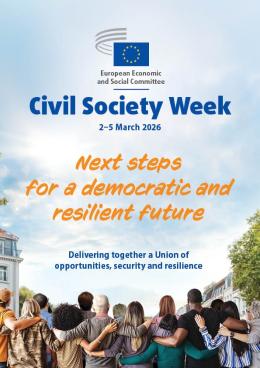
    Europe is facing a pivotal moment. Social and economic inequalities, rapid technological change, anti-democratic forces and geopolitical instability are straining the foundations of the European project.

    With democracy and civic space under mounting pressure, civil society organisations, human rights defenders and free media face growing constraints - from restrictive laws and disinformation campaigns to underfunding and public distrust. Deepening polarisation and eroding trust in institutions further undermine Europe’s democratic model.

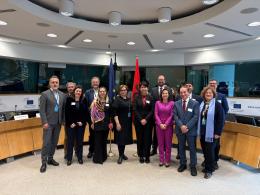
  • Albania remains firmly committed to EU integration, advancing accession negotiations and implementing the growth plan for the Western Balkans, with reforms in the rule of law, digitalisation and the green transition. However, anti-corruption and media freedom require further robust efforts. These topics were at the centre of discussions during the 2nd meeting of the EU-Albania Civil Society Joint Consultative Committee on 21 November 2025.

  • Event type
    JCC Meeting

    European Economic and Social Committee (EESC) and Montenegro held its 21st Civil Society Joint Consultative Committee (JCC) on 16 December 2025, at the EESC in Brussels, Belgium. This platform, established between the EESC and Montenegrin civil society, provides a civil society perspective within the EU institutional framework related to the Stabilisation and Association Agreement between the EU and Montenegro. The JCC enables civil society organisations from both sides to monitor Montenegro's accession negotiations, discuss common interests, and inform the public about the challenges during the accession period.

    @EESC_REX   |   #EUMontenegro    |    #EESC_WB

  • Event type
    JCC Meeting

    The second meeting of the EU-Albania Joint Consultative Committee (JCC) will took place on  21 November 2025 at the EESC in Brussels, Belgium. This platform, established within the institutional framework of the EU-Albania Stabilisation and Association Agreement (SAA), will enable representatives from both the EU and Albanian civil society to monitor the country's accession negotiations, discuss issues of common interest, and highlight concerns to be addressed on Albanian's path towards the European Union.

    @EESC_REX
    #EESC
    #EESCAlbania

  • The EU-Serbia Joint Consultative Committee (JCC) held its 20th meeting on 28 November 2025 in Serbia. This platform, established within the institutional framework of the EU-Serbia Stabilisation and Association Agreement (SAA), will enable representatives from both the EU and Serbian civil society to monitor the country's accession negotiations, discuss issues of common interest, and highlight concerns to be addressed on Serbia's path towards the European Union.

    @EESC_REX
    #EESC
    #EESCSerbia