This report examines how the COVID-19 pandemic has affected the work of civil society organisations (CSOs) across Europe. It also focuses on how solutions implemented in individual EU Member States have impacted CSOs' ability to exercise their fundamental rights and freedoms.
Volunteering happens when volunteer energy (willingness, capability and availability to volunteer) and volunteer opportunities (possibility to volunteer) are matched. The objective of this study is to create classifications of volunteer energy and volunteer opportunities, providing a qualitative overview of the strengths, weaknesses, opportunities and threats (SWOT) that volunteering is facing in the EU.
The contribution of the European Economic and Social Committee and the national Economic and Social Councils to the Conference on the Future of Europe
Conclusions of the annual meeting of the presidents and secretaries-general of the European Economic and Social Committee and of the Economic and Social Councils of the European Union - 22-23 November 2021
At a conference, organised by the Diversity Europe Group of the EESC in partnership with Civil Society Europe and with the support of the EESC's Liaison Group and Associational Life Category, Civil Society Organisations (CSOs) and their umbrella organisations reiterated their call for an EU Civil Society Strategy and a European Statute for Associations. Appropriate follow-up to the Conference on the Future of Europe and a regular and structured dialogue with CSOs were considered key aspects to rebuilding citizens' trust in politics and strengthening European democracy.
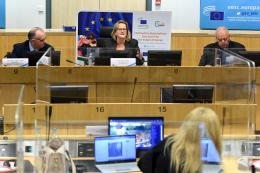
Conference on 'Civil society organisations: Key actors for the future of Europe',organised by the Diversity Europe Group in partnership with Civil Society Europe and with the support of the EESC's Liaison Group and Associational Life Category