Europe will need significantly more investment if it wants to secure the critical raw materials required for its green, digital and defence transitions, the European Economic and Social Committee (EESC) warned in an opinion adopted at its June plenary session.
During its June plenary session, the European Economic and Social Committee (EESC) adopted an opinion evaluating the implementation of the EU Whistleblower Protection Directive, warning that significant gaps remain between legal protections and their practical application. The Committee calls for stronger safeguards against retaliation, better support for whistleblowers, greater involvement of civil society and a cultural shift that sees whistleblowing as a contribution to democracy, transparency and the public interest.
The European Economic and Social Committee (EESC) has adopted an information report and a resolution calling for a stronger role for social partners and civil society organisations in shaping national reforms and investments. The EESC calls for the creation of a European code for structured consultations and mandatory assessments of partnership practices to improve transparency, effectiveness and democratic legitimacy.
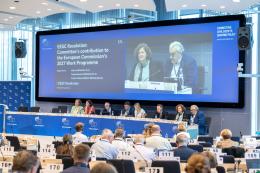
Against a backdrop of growing geopolitical instability, multiple social fractures and an accelerating climate change crisis, the Committee has set out key recommendations for the European Commission, which is expected to adopt its 2027 work programme in October.
Ahead of the UN Water Conference 2026, the European Economic and Social Committee (EESC) held a plenary debate with EU Commissioner for Environment and Water Resilience Jessika Roswall. The EESC calls for water to be treated as a strategic resource for Europe’s economy, security and global role.
The European Economic and Social Committee is calling on the European Union to adopt a long-term, dedicated strategy and increase funding for its eastern border regions, warning that they face security, economic and demographic pressures that exceed the scope of existing policy tools.
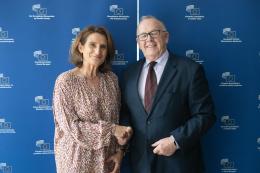
During a plenary debate at the European Economic and Social Committee (EESC), the European Commission Executive Vice-President Teresa Ribera stressed the strategic importance of the Circular Economy Act for Europe’s future.This point was underlined by the EESC members who called for circularity to be put at the heart of Europe’s competitiveness and resilience agenda. It should be seen not only as an environmental objective but also an economic and geopolitical strategy.