
European Economic
and Social Committee
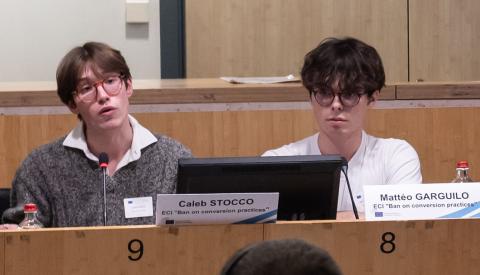
The European Citizens' Initiative (ECI) to ban conversion practices in the EU collected over 1.2 million signatures in just six days, showing widespread public backing for putting an end to attempts to change or suppress an LGBTIQ+ person's identity. During Gender Equality Week 2025, the EESC’s Section for Employment, Social Affairs and Citizenship (SOC) held a debate on the initiative, urging the EU to ban conversion practices and emphasising the need to protect the dignity and rights of all LGBTIQ+ people.
'This is a testament to the widespread support among EU citizens for ending these harmful practices,' campaigners Mattéo Garguilo and Caleb Stocco said during the debate, which brought together EU officials, civil society and campaigners, reflecting strong support for action. The initiative will be formally submitted to the European Commission, leading to hearings and a response by May 2026.
The timing of this ECI aligns with the launch of the new EU LGBTIQ+ Equality Strategy 2026–2030, which aims to protect LGBTIQ+ people from violence and discrimination, with banning conversion practices as a key focus. However, only 8 of the 27 Member States currently have such bans, and enforcement is inconsistent. The ECI calls for a comprehensive EU-wide ban, robust enforcement and support for victims.
The reality and impact of conversion practices
Conversion practices – attempts to change or suppress an LGBTIQ+ person’s identity – are condemned internationally. They take many forms, from pseudo-psychotherapy and religious rituals to physical and psychological abuse. The 2023 LGBTIQ survey found that 24% of respondents had experienced some form of conversion practice, with trans and non-binary people affected in particular. The consequences are severe: psychological and physical harm, increased risk of addiction, depression and suicide. These practices violate fundamental human rights and dignity.
Barriers and challenges
Barriers include hidden practices, lack of awareness, and inconsistent enforcement. Vulnerable groups – young people, those with disabilities and ethnic minorities – face higher risks. Conversion practices occur across all age groups and are often perpetrated within families.
Speakers called for a multi-faceted approach: criminal bans, anti-discrimination laws, child protection, public policy initiatives and victim support. Collaboration, clear guidance for Member States and adequate funding for organisations supporting victims are essential. The EESC debate made clear that conversion practices are a present and pressing issue, violating European values and human rights. Their eradication requires concrete political choices, robust legal frameworks and sustained civil society engagement. (lm)