Nachhaltige Lebensmittelsysteme

This page is also available in:

Ohne Lebensmittel können wir nicht leben. Die Lebensmittelerzeugung ist Teil der europäischen Kultur. Die Lebensmittel, die wir konsumieren, die Art und Weise, wie sie erzeugt werden, und das Ausmaß der Lebensmittelverschwendung haben jedoch erhebliche Auswirkungen auf die menschliche Gesundheit, die natürlichen Ressourcen und die Gesellschaft als Ganzes:

  • Die Menschen (und vor allem Kinder) leiden aufgrund ungesunder Ernährung zunehmend unter Übergewicht und Fettleibigkeit.
  • Landwirte und Arbeitnehmer erhalten für ihre Erzeugnisse keine fairen Preise.
  • Im Verlauf der Lebensmittelkette geht ein Drittel der Lebensmittel verloren oder landet auf dem Müll.
  • Die Folgen davon trägt die Umwelt: Die Erzeugung und der Konsum von Lebensmitteln tragen erheblich zu Klimawandel, den Biodiversitätsverlust, Luft- und Wasserverschmutzung, Bodendegradation usw. bei.

Die COVID-19-Krise ist ein Weckruf, der uns deutlich macht, dass sich etwas ändern muss. Sie hat deutlich gemacht, dass die Bereitstellung von Lebensmitteln „vom Hof auf den Tisch“ nicht als selbstverständlich angesehen werden kann, und sie hat gezeigt, wie sehr die Akteure und Aktivitäten im gesamten Lebensmittelsystem miteinander verflochten sind. Faire, ressourceneffiziente, inklusive und nachhaltige Lieferketten im gesamten Landwirtschafts- und Lebensmittelsektor sind nötiger denn je, um für Bürger, Landwirte, Arbeitnehmer und Unternehmen gleichermaßen zu sorgen.

Der EWSA setzt sich seit Jahren mit Nachdruck für eine nachhaltige und umfassende Ernährungspolitik ein. Ein derartig integrierter und systematischer Ansatz ist der einzige Weg, um die vielfältigen, miteinander verknüpften Herausforderungen im Bereich der Lebensmittelsysteme zu bewältigen: im Sinne wirtschaftlicher, ökologischer und soziokultureller Nachhaltigkeit; zur Gewährleistung der Integration und Kohärenz über alle Politikbereiche hinweg (Landwirtschaft, Umwelt, Gesundheit, Bildung, Handel, Wirtschaft, Technologie usw.); und zur Förderung der Zusammenarbeit zwischen den verschiedenen Regierungs- und Verwaltungsebenen.

  • in Erarbeitung (updated on 21/08/2026) - Bureau decision date: 14/07/2026
    Referenz
    NAT/1000-EESC
    Plenary session number
    611
    -
  • This event will explore how sustainable food systems can advance the implementation of the Sustainable Development Goals (SDGs) in today’s geopolitical and environmental landscape. The meeting will focus on SDG 7 (Affordable and Clean Energy) and SDG 11 (Sustainable Cities and Communities), both under review at the 2026 UN High-level Political Forum on Sustainable Development (HLPF). 

  • The EU needs a long-term vision that takes greater account of geographic specificities. Sustainable water management and food security must become top priorities, with food security and biodiversity going hand in hand. 

  • Event in the framework of the Cyprus Presidency of the Council of the EU
    Event type
    Conference

    Watch the recording of the event.

  • verabschiedet on 18/03/2026 - Bureau decision date: 02/12/2025
    Referenz
    NAT/977-EESC-2025
    Civil Society Organisations - GR III
    Austria
    Plenary session number
    604
    -
    • Record of proceedings NAT/977
    • Follow-up from the Commission NAT/977
    Download format:
    Download — Stellungnahme des Ausschusses: Organic production rules – targeted amendment to Regulation 2018/848
  • This debate, hosted by the EESC, will feature a presentation by FAO of its recent report on the State of Food Security and Nutrition in the World 2025, including latest data and analysis, and updated estimates on the cost and affordability of healthy diets. 

  • Published in
    Study
    70 pages

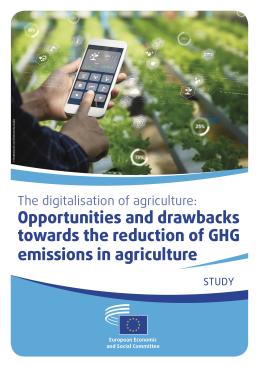
    Opportunities and drawbacks towards the reduction of GHG emissions in agriculture

    This study evaluates the environmental, social, and economic impacts of digitalisation based on a literature review and case studies in Estonia, Germany, Romania, and Spain

  • Published in
    Study
    82 pages

    Cultured meat (CM) is raising interest globally, including from multinational food companies, as an innovative technology to produce meat without farming animals. This completely different way of obtaining animal proteins is perceived as disruptive to the existing system. This study reviews the state of the art of research related to the potential impact of CM development on environmental, social and economic aspects of sustainability, highlighting important knowledge gaps. These gaps fuel polarised positions.

  • verabschiedet on 18/03/2026 - Bureau decision date: 15/07/2025
    Referenz
    NAT/963-EESC-2025
    Employers - GR I
    France
    Plenary session number
    604
    -
    • Record of Proceedings NAT/963
    • Follow-up from the Commission NAT/963
    Download format:
    Download — Stellungnahme des Ausschusses: Generational renewal strategy
  • Event type
    Public hearing

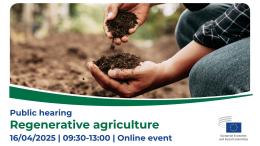
    On 16 April 2025, the EESC will hold an online event on the role that regenerative agriculture can play in revitalising rural areas, improving soil health, and enhancing carbon sequestration to ensure long-term productivity and food security.