
European Economic
and Social Committee
Building a competitive EU bioeconomy through nature-based biodegradable materials
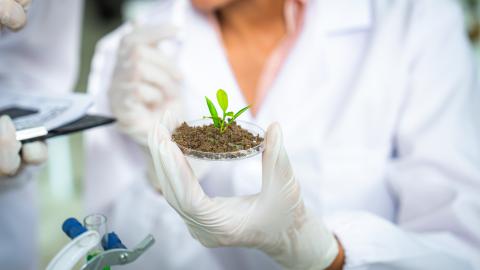
As the EU moves towards the creation of a real and sustainable circular economy, it has a key opportunity to reinforce its bioeconomy combining environmental sustainability, an efficient use of biomass, industrial competitiveness and territorial cohesion. Nature-based biodegradable materials can reduce pollution, complement recycling where technical practices are not effective, add value to agricultural waste and byproducts strengthening rural economies; and drive European innovation and competitiveness. In doing so, biodegradable materials would contribute to the transformation of a sector that, as noted by Enrico Letta, has the potential of growing from €31 billion, could grow to €100 billion by 2030, creating 0.5 million new jobs and saving 21 megatonnes of CO2 emissions.
When considering these materials, the most appropriate approach is one that prioritises organic waste, byproducts, and second-generation raw materials, thereby strengthening the agri-food sector without creating direct competition with the food supply chain or putting pressure on fertile agricultural land. Complementarily, two principles remain fundamental: waste hierarchy and life-cycle assessment. In many cases, technical recycling will continue to be the best option, playing a clear central role. However, when certain materials or applications are considered, biological solutions, such as nature-based biodegradable materials, may be appropriate and offer a better environmental outcome.
Moreover, to make sure that the bioproducts are used effectively, a predictable and stable regulatory environment is essential. Companies need certainty and safeguards to commit to sustainable solutions. As such, policies and regulatory measures should secure the consideration of nature-based biodegradable materials, promoting innovation, creating new value chains and reducing external dependence on fossil raw materials.
The current debate surrounding the new EU Bioeconomy Strategy, and the still-pending Circular Economy Act, the future revision of the Single-Use Plastics Directive and the implementation of the Packaging and Packaging Waste Regulation (PPWR) are of particular importance, especially for materials derived from natural polymers, whose legal status as non-plastics its not consistently reflected across all the EU´s legal framework.
In this regard, if recyclability criteria are interpreted too narrowly, innovative packaging solutions designed for biological circularity could face barriers or even exclusion from the market. The regulatory goal should not be to limit innovation through rigid definitions, but rather to ensure that materials placed on the market can demonstrate a credible environmental performance. Thus, a more enabling, science-based approach on the regulation would better reflect technological reality and support European competitiveness in advanced nature-based biodegradable materials.
Furthermore, innovation must be accompanied by trust. Robust safeguards are needed to ensure that biodegradation does not lead to persistent residues or other unintended impacts. A stable market for these nature-based materials can only emerge if companies, regulators, and consumers can rely on common and consistent standards. Thus, If the EU wants to create benchmark markets for nature-based biodegradable materials, it must do so through common recyclability standards that are predictable, proportionate, and scalable across the entire EU. This would also contribute to the reduction of barriers within the European Single Market. Regulatory fragmentation along Member States regarding the consideration of nature-based biodegradable materials would increase costs and undermine business investment, legal certainty and competitiveness.
For all these reasons, the strategy is clear: the EU must promote nature-based biodegradable materials as part of a broader circular economy strategy that fosters innovation and strategic autonomy. This commitment requires a coherent framework, based on scientific evidence and compatible with industrial and business realities. If done right, nature-based biodegradable materials can support a real circular economy model, create new jobs, foster innovation, reinforce the European industrial leadership and contribute to a common goal: strengthen the European competitiveness, strategic autonomy, and territorial cohesion.
By Josep Puxeu Rocamora, EESC Employers' Group member and member of the Study Group of Opinion NAT/970 A comprehensive strategy for nature-based biodegradable materials to foster circularity and resource efficiency, strengthen the agri-food sector and scale-up the EU bioeconomy.
Work organisation
Recommended for you
Rolul activ al societății civile organizate este esențial pentru o UE rezilientă
News
CESE a organizat, în sesiune plenară, o dezbatere privind importanța tot mai mare a societății civile organizate și a orașelor în asigurarea capacității Europei de a face față șocurilor asimetrice și…
Crearea în comun a serviciilor publice în sectorul sănătății va contribui la o democrație mai participativă în UE
News
Acest eveniment, organizat de Comitetul Economic și Social European (CESE) și de Universitatea din Debrecen, a evidențiat importanța crucială a creării în comun a serviciilor de interes general în…
Pentru a combate schimbările climatice, UE are nevoie de mai multe investiții publice în infrastructura energetică
News
Într-un aviz adoptat în sesiunea plenară din septembrie, Comitetul Economic și Social European (CESE) consideră că, pentru a realiza tranziția energetică și obiectivele climatice, sunt necesare…
Energie – CESE avertizează cu privire la crearea de noi dependențe
News
Într-un aviz adoptat în sesiunea sa plenară din septembrie Comitetul Economic și Social European (CESE) adoptă o poziție fermă în domeniul energiei: propunerea Comisiei reprezintă un pas în direcția…
Tranziția digitală trebuie să fie echitabilă: drepturile omului și controlul uman asupra mașinii trebuie să rămână valori fundamentale
News
Comitetul Economic și Social European (CESE) subliniază oportunitățile oferite de revoluția digitală, dar avertizează și cu privire la riscuri: implementate prea rapid, soluțiile digitale pot duce la…