
European Economic
and Social Committee
Building a competitive EU bioeconomy through nature-based biodegradable materials
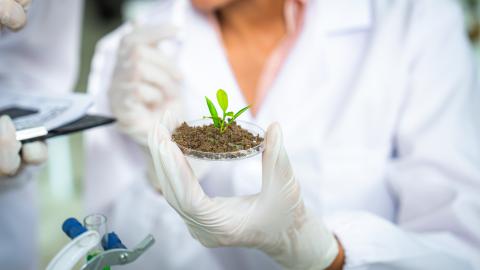
As the EU moves towards the creation of a real and sustainable circular economy, it has a key opportunity to reinforce its bioeconomy combining environmental sustainability, an efficient use of biomass, industrial competitiveness and territorial cohesion. Nature-based biodegradable materials can reduce pollution, complement recycling where technical practices are not effective, add value to agricultural waste and byproducts strengthening rural economies; and drive European innovation and competitiveness. In doing so, biodegradable materials would contribute to the transformation of a sector that, as noted by Enrico Letta, has the potential of growing from €31 billion, could grow to €100 billion by 2030, creating 0.5 million new jobs and saving 21 megatonnes of CO2 emissions.
When considering these materials, the most appropriate approach is one that prioritises organic waste, byproducts, and second-generation raw materials, thereby strengthening the agri-food sector without creating direct competition with the food supply chain or putting pressure on fertile agricultural land. Complementarily, two principles remain fundamental: waste hierarchy and life-cycle assessment. In many cases, technical recycling will continue to be the best option, playing a clear central role. However, when certain materials or applications are considered, biological solutions, such as nature-based biodegradable materials, may be appropriate and offer a better environmental outcome.
Moreover, to make sure that the bioproducts are used effectively, a predictable and stable regulatory environment is essential. Companies need certainty and safeguards to commit to sustainable solutions. As such, policies and regulatory measures should secure the consideration of nature-based biodegradable materials, promoting innovation, creating new value chains and reducing external dependence on fossil raw materials.
The current debate surrounding the new EU Bioeconomy Strategy, and the still-pending Circular Economy Act, the future revision of the Single-Use Plastics Directive and the implementation of the Packaging and Packaging Waste Regulation (PPWR) are of particular importance, especially for materials derived from natural polymers, whose legal status as non-plastics its not consistently reflected across all the EU´s legal framework.
In this regard, if recyclability criteria are interpreted too narrowly, innovative packaging solutions designed for biological circularity could face barriers or even exclusion from the market. The regulatory goal should not be to limit innovation through rigid definitions, but rather to ensure that materials placed on the market can demonstrate a credible environmental performance. Thus, a more enabling, science-based approach on the regulation would better reflect technological reality and support European competitiveness in advanced nature-based biodegradable materials.
Furthermore, innovation must be accompanied by trust. Robust safeguards are needed to ensure that biodegradation does not lead to persistent residues or other unintended impacts. A stable market for these nature-based materials can only emerge if companies, regulators, and consumers can rely on common and consistent standards. Thus, If the EU wants to create benchmark markets for nature-based biodegradable materials, it must do so through common recyclability standards that are predictable, proportionate, and scalable across the entire EU. This would also contribute to the reduction of barriers within the European Single Market. Regulatory fragmentation along Member States regarding the consideration of nature-based biodegradable materials would increase costs and undermine business investment, legal certainty and competitiveness.
For all these reasons, the strategy is clear: the EU must promote nature-based biodegradable materials as part of a broader circular economy strategy that fosters innovation and strategic autonomy. This commitment requires a coherent framework, based on scientific evidence and compatible with industrial and business realities. If done right, nature-based biodegradable materials can support a real circular economy model, create new jobs, foster innovation, reinforce the European industrial leadership and contribute to a common goal: strengthen the European competitiveness, strategic autonomy, and territorial cohesion.
By Josep Puxeu Rocamora, EESC Employers' Group member and member of the Study Group of Opinion NAT/970 A comprehensive strategy for nature-based biodegradable materials to foster circularity and resource efficiency, strengthen the agri-food sector and scale-up the EU bioeconomy.
Work organisation
Recommended for you
Az egészségügyi ágazatbeli közszolgáltatások közös létrehozása erősíteni fogja a demokrácia részvételi jellegét az EU-ban
News
Az Európai Gazdasági és Szociális Bizottság (EGSZB) és a Debreceni Egyetem által szervezett rendezvény rávilágított, mennyire fontos az általános érdekű szolgáltatások közös létrehozása az…
YEYS! 2023: A fiatalok átláthatóbb, digitalizált és egyszerűbb EU-t szeretnének
News
Március 23-án és 24-én az Európai Gazdasági és Szociális Bizottság (EGSZB) immár 14. alkalommal adott otthont a „Your Europe, Your Say!” (A Te Európád, a Te szavad! – YEYS!) című rendezvénynek. Erre…
Az EGSZB megnyitja a jelentkezést civil társadalmi díjára, melynek témája a mentális egészség
News
Civil társadalmi szervezetek, magánszemélyek és magánvállalkozások mostantól nevezhetik nonprofit projektjeiket az európai polgárok mentális jólétének támogatásának szentelt EGSZB-díjra. Az Európai…
Az EGSZB felhívása: 2024 júniusában szavazzunk egy egységes és demokratikus Európai Unióra!
News
A demokrácia világszerte hanyatlik, a növekvő infláció és a háború fenyegető veszélye közepette a dezinformáció térnyerése és egyre nagyobb elégedetlenség tapasztalható. Nagy tehát a tétje az új…
Az Európai Gazdasági és Szociális Bizottság készen áll arra, hogy együttműködjön az EU Tanácsának magyar elnökségével
News
Az Európai Gazdasági és Szociális Bizottság (EGSZB) júliusi plenáris ülésén Oliver Röpke EGSZB-elnök vitát tartott Bóka János európai uniós ügyekért felelős miniszterrel, aki ismertette az EU Tanácsa…