From concept to practice for more sustainable food systems in the EU
Location
Brussels
Belgium
On Thursday 8 October, from 16:00 to 17:30 CEST, the NAT Section of the EESC is hosting a debate on the right to food during its monthly Section meeting. The event will focus on presenting a common understanding of the concept of the right to food, as well as opportunities and barriers for more sustainable food systems in the EU.
In this overview the European Economic and Social Committee (EESC) shares its opinions on the European Commission’s proposals for the Multiannual Financial Framework (MFF) 2028-2034, bringing together the perspectives of organised civil society on the future direction of the EU budget.
Public debate in the ECO Section on the The Multiannual Financial Framework after 2027 - Assessing progress and outstanding challenges. The event will take stock of developments in the negotiations since the Commission presented their proposals for the next Multiannual Financial Framework and discuss outstanding challenges.
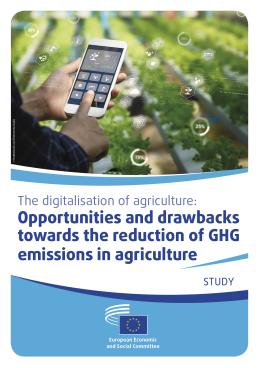
Opportunities and drawbacks towards the reduction of GHG emissions in agriculture
This study evaluates the environmental, social, and economic impacts of digitalisation based on a literature review and case studies in Estonia, Germany, Romania, and Spain
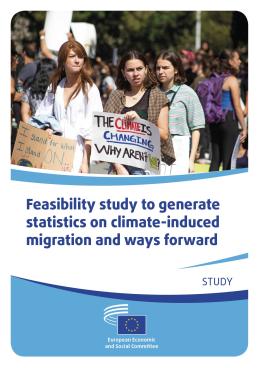
This feasibility study to generate statistics on climate-induced migration and ways forward sought to gather and review existing data on climate-induced migration, focussing on five Member States (France, Germany, Greece, Italy and Spain) and one candidate country (Türkiye), to inform an effective EU response. There is no universally agreed definition of climate-induced migration. The majority of population movements as a result of rapid onset events takes place within a country as opposed to across borders.
Cultured meat (CM) is raising interest globally, including from multinational food companies, as an innovative technology to produce meat without farming animals. This completely different way of obtaining animal proteins is perceived as disruptive to the existing system. This study reviews the state of the art of research related to the potential impact of CM development on environmental, social and economic aspects of sustainability, highlighting important knowledge gaps. These gaps fuel polarised positions.
A new report on Europe’s progress toward the Sustainable Development Goals (SDGs) highlights a significant slowdown, raising concerns about the EU’s ability to meet the 2030 targets. The Europe Sustainable Development Report 2025 (ESDR), published by the UN Sustainable Development Solutions Network (SDSN), finds that the pace of SDG progress between 2020 and 2023 was more than twice as slow as in the previous period.