Fundamental Rights and the Rule of Law

This page is also available in:

The EU is not only a common market; it is a union of common values that shape the European identity. These values are set out in the Treaty on the European Union and also include the rights, freedoms and principles laid out in the Charter of Fundamental Rights: the "indivisible, universal values of human dignity, freedom, equality and solidarity; [the Union] is based on the principles of democracy and the rule of law. It places the individual at the heart of its activities, by establishing the citizenship of the Union and by creating an area of freedom, security and justice."

The Charter brings together into a single text all the personal, civic, political, economic and social rights enjoyed by people within the EU and apply to the EU institutions and Member States when they implement EU law.

The EESC is very active in the promotion of fundamental rights, the rule of law and democracy, and especially in the fight against discrimination based on race, ethnic origin, disability or gender. In 2018, it established the Group on Fundamental Rights and the Rule of Law to further expand analysis of the situation across Europe and promote a constructive dialogue amongst all stakeholders.
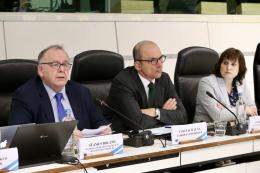
  • Conference on 'Civil society organisations defending and strengthening European democracy' organised by the EESC's Civil Society Organisations' Group

  • Reference number
    15/2023

    On 23 March, the European Economic and Social Committee (EESC) held a plenary debate and adopted a resolution entitled "United for Democracy" with concrete proposals to strengthen democracies and democratic values across the European Union. Policymakers, experts, and organised civil society representatives agreed that civic education, better funding to social partners and a focus on the local dimension, are key to democracy in Europe.

  • Reference number
    65/2022

    The EESC Fundamental Rights and Rule of Law Group held a public hearing on protecting women's sexual and reproductive health and rights. Participants in the debate called for free health services, access to contraception, more inclusive policies, and reproductive and sexual education. This debate was organised in collaboration with the EESC Equality Group as part of a series of EESC events following up on the European Parliament's Gender Equality Week initiative.

  • EESC plenary debate linked to the adoption of the opinions SOC/726 on Combatting violence against women and SOC/731 on Gender equality, with Christina Fabre, Team leader on gender-based violence, European Institute for Gender Equality (EIGE).

  • "The rule of law: why should we care?" was the thought-provoking question put to participants in a hearing jointly organised by the EESC Fundamental Rights and Rule of Law Group and the International Bar Association (IBA) on 6 July 2022 in Bratislava, Slovakia.

  • Lifelong learning will ensure jobs and decent living standards. However, in the absence of a standardised system across the EU, not all workers have opportunities to reskill and upskill during their careers, an EESC study finds

  • Statement to mark European Diversity Month by Séamus Boland, President of the Civil Society Organisations' Group of the EESC

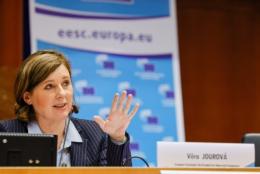
  • EESC plenary debate with Věra Jourová, European Commission Vice-President for Values and Transparency, linked to the opinion SOC/691

  • Connecting EU seminar 2021 on 'What kind of Europe do you dream of?', panel on 'European democracy: how can we buttress press freedom in Europe against looming multiple threats?' - Lisbon, 19 November 2021

  • At a conference, organised by the Diversity Europe Group of the EESC in partnership with Civil Society Europe and with the support of the EESC's Liaison Group and Associational Life Category, Civil Society Organisations (CSOs) and their umbrella organisations reiterated their call for an EU Civil Society Strategy and a European Statute for Associations. Appropriate follow-up to the Conference on the Future of Europe and a regular and structured dialogue with CSOs were considered key aspects to rebuilding citizens' trust in politics and strengthening European democracy.