
European Economic
and Social Committee
The greening transition in water transport must take into account people's health
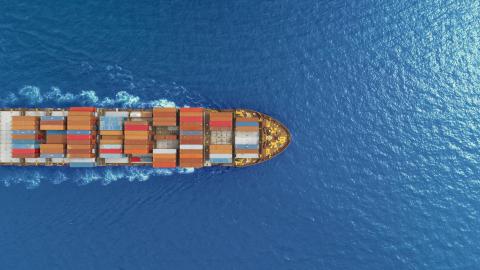
The European Economic and Social Committee (EESC) says that the greening of river and seaport activities should consider the impact on the health and quality of life of local residents and workers. To this end, port and transport stakeholders should work together with local and regional authorities to rethink the links between cities, ports and transport means.
Maritime and inland waterway transport greening must take into account the health and quality of life of those living and working in the vicinity of navigation channels and ports. This is the main message of the EESC opinion drawn up by Pierre Jean Coulon and adopted at the Committee's February plenary session.
In the document, the EESC addresses the societal dimension of local and regional maritime transport issues, presenting recommendations which are integral for the future enhancement of the blue economy, and complementing the conclusions of two other opinions recently adopted: FuelEU Maritime (TEN/751) and NAIADES III (TEN/752).
Speaking on the sidelines of the plenary, Mr Coulon said we need an innovative and sustainable approach combining green and health objectives. In maritime transport, close cooperation with all stakeholders in the cluster and supply chain is needed to reach the ultimate goal. The same applies for the necessary interest in creating intermodal terminals, allowing for the development of inland waterway transport in cities, contributing to a better quality of life
.
Taking into account the impact of river and seaport activities on health
Maritime transport makes up approximately 75% of EU freight transport. The networks under construction and the future interconnections will make it possible to expand inland waterway transport even further, capitalising on this increasingly low-carbon mode of transport, which can be optimised by deploying multimodality, particularly in ports, and especially in the post-COVID period.
It is therefore extremely important to strike a balance between economic, social and environmental aspects through an integrated approach. Port authorities and transport stakeholders should work together with local and regional authorities to rethink the links between cities, ports, and transport means.
Future infrastructure will need to take into account the health concerns of those living and working in the vicinity, where sensitive issues such as air quality and noise pollution are present. In this respect, the Commission should pay particular attention to, and make use of, sound studies on the health repercussions of river and seaport activities.
Focus on staff training and new, more sustainable fleets
Other concerns that need to be addressed are staff training, issues related to employment prospects, the unequal treatment between men and women, and the profound changes brought about by job digitalisation and automation.
The success of the greening transition relies on the implementation of continued training for employees. The maritime sector suffers from a skills shortage, which makes it difficult to fill posts and retain seafarers. The sector lacks attractiveness due to, among other things, the fact that seafaring is no longer considered a great way to see the world.
In addition, the number of women in maritime transport is still relatively low. Women in the sector are under-represented, with few expectations for improvement. In the EESC's view, this must change. Technology developments stemming from the greening of the sector should drive job creation and change perceptions of maritime transport in a way that would see traditional jobs at sea evolving towards high-added-value jobs on land, allowing for the recruitment of more women.
Renewing fleets is also indispensable in order to reduce inland waterway transport's dependence on fossil fuels, cut energy consumption, and find ways to use cleaner energy. This sector is primarily composed of small-scale skippers and SMEs who are currently suffering economic hardships, such as a loss of turnover of around EUR 2.7 billion, and a 70% reduction in passenger transport. Fleet renewal would require social acceptance from skippers, and this can only be ensured by gaining their trust through investments and long-term financial support.
Work organisation
Recommended for you
Rolul activ al societății civile organizate este esențial pentru o UE rezilientă
News
CESE a organizat, în sesiune plenară, o dezbatere privind importanța tot mai mare a societății civile organizate și a orașelor în asigurarea capacității Europei de a face față șocurilor asimetrice și…
Decision repealing Directive 89/629/EEC
Opinion
PUNCTE PRINCIPALE CESE: întrucât conținutul propunerii formulate este satisfăcător și nu face obiectul niciunei observații din partea sa, Comitetul a hotărât să emită aviz favorabil cu privire la…
Crearea în comun a serviciilor publice în sectorul sănătății va contribui la o democrație mai participativă în UE
News
Acest eveniment, organizat de Comitetul Economic și Social European (CESE) și de Universitatea din Debrecen, a evidențiat importanța crucială a creării în comun a serviciilor de interes general în…
Pentru a combate schimbările climatice, UE are nevoie de mai multe investiții publice în infrastructura energetică
News
Într-un aviz adoptat în sesiunea plenară din septembrie, Comitetul Economic și Social European (CESE) consideră că, pentru a realiza tranziția energetică și obiectivele climatice, sunt necesare…
Energie – CESE avertizează cu privire la crearea de noi dependențe
News
Într-un aviz adoptat în sesiunea sa plenară din septembrie Comitetul Economic și Social European (CESE) adoptă o poziție fermă în domeniul energiei: propunerea Comisiei reprezintă un pas în direcția…