
European Economic
and Social Committee
Blockchain technologies and the mining industry: a shared future
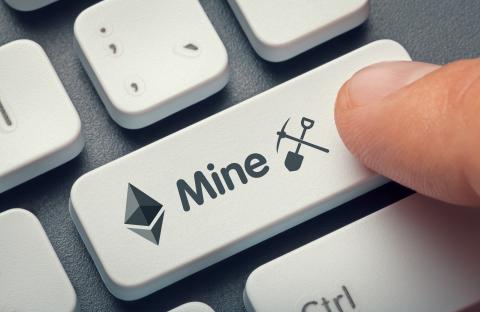
At the webinar organised by the Consultative Commission on Industrial Change (CCMI), EESC members, external delegates and stakeholders of the mining industry assess the impact of new technologies in the sustainable production of raw materials, highlighting benefits, limitations and potential risks from a social point of view.
Blockchain technologies are an important step forward in the mining industry and could represent a new solution for future mining activities, but the digital transition should be carefully managed, taking into account the social consequences. This was the main message from the online round table organised by the Consultative Commission on Industrial Change (CCMI) of the European Economic and Social Committee (EESC) on 14 December 2020.
Mining companies which embraced the digital transition have recorded improvements in terms of safety, sustainability, productivity and profits. More specifically, blockchain represents the future in this area, but its governance needs to be discussed and established. In addition, we need to minimise the social and territorial imbalances brought about by the transformation of activities and in the broader framework of the new Green Deal and circular economy changes
, said Pietro De Lotto, CCMI president, welcoming the guests.
This was echoed by Hilde Van Laere, CCMI member: Blockchain is at the heart of the digital transition and has the potential to transform businesses and the whole of society, not only the mining industry. It has digitally changed every enterprise in every sector and has also transformed the context of mining. With its capacity to provide security and transparency in business transactions, as well as to record changes to documents and business agreements, blockchain technology has extremely useful applications in mining
.
What blockchain is and why it is important
Blockchain is an innovative system of recording information that prevents data manipulation. It is a sort of digital ledger of transactions which all connected computer systems have access to. It was originally created to ensure trust in financial transactions, as it allows unique digital items to be created that nobody can change.
This new technology can be applied in other areas, such as mining, to track where materials come from, where they are produced and whether they are sustainable or not. With the potential to improve supply chain transparency and traceability, blockchain used in the mineral raw materials sector is therefore an ideal tool to build a responsible future, while reducing administrative costs.
Advantages of blockchain in mining
There are three main aspects of mining where blockchain technologies could provide added value and have a strong impact. First of all, blockchain can be used in engineering, construction and handover of mine sites, making transactions traceable during the complex processes of managing regulations and standards, and ensuring trust and work compliance.
Secondly, blockchain is useful in compliance and mining lease management, facilitating the workflow and visibility of documents, e.g. by improving the traceability of reserve estimation for stock exchange reporting.
Finally, as mentioned earlier, blockchain can be applied to the supply chain, in particular to track materials, from the blocks of ore to the concentrate and metal. This would improve transparency, clarifying the origin of minerals and tracking all the steps up to the final customer. Many manufacturing companies are indeed concerned about the source of minerals and have decided not to use those that are extracted in conflict zones and/or sold by mining companies that do not comply with labour and environmental standards.
Thus while blockchain in mining may have various benefits, there are also limits to its use. Business processes can in fact be transformed only if a number of conditions are met, such as the creation of a broad network of transactions and willingness of participants to provide true information on what and when and – by doing this – to stick to the digital database as the only source of trust.
What stakeholders say
A wide range of operational and institutional stakeholders joined the debate: the Swedish Mining Organisation, Minespider, Kamni Chain, IndustriALL Norway, the International Raw Materials Observatory, the Organisation for Economic Co-operation and Development (OECD), the European Commission, and the European External Action Service (EEAS). The main topics up for discussion were blockchain governance (who should manage the digital ledger and how), interoperability of different models, and data transparency and privacy. As a multi-party system, blockchain databases need to be managed by all participants in accordance with the common rules, and this raises issues about who should take the lead.
The webinar was held to follow up on opinion CCMI/176 on Digital Mining in Europe: New solutions for the sustainable production of raw materials, drawn by Marian Krzaklewski and Hilde Van Laere, which the EESC adopted at its September plenary session. In the opinion, the EESC identifies digitalisation of the EU raw materials sector as a unique opportunity to enhance the resilience of European industrial supply chains while at the same time improving the environmental performance of the minerals sector and increasing transparency and dialogue with communities affected by mining activities. In this context, the European Commission should ensure that the social partners in the extractive sector are always consulted by the European institutions on any relevant EU initiative.
Work organisation
Recommended for you
Rolul activ al societății civile organizate este esențial pentru o UE rezilientă
News
CESE a organizat, în sesiune plenară, o dezbatere privind importanța tot mai mare a societății civile organizate și a orașelor în asigurarea capacității Europei de a face față șocurilor asimetrice și…
Crearea în comun a serviciilor publice în sectorul sănătății va contribui la o democrație mai participativă în UE
News
Acest eveniment, organizat de Comitetul Economic și Social European (CESE) și de Universitatea din Debrecen, a evidențiat importanța crucială a creării în comun a serviciilor de interes general în…
Pentru a combate schimbările climatice, UE are nevoie de mai multe investiții publice în infrastructura energetică
News
Într-un aviz adoptat în sesiunea plenară din septembrie, Comitetul Economic și Social European (CESE) consideră că, pentru a realiza tranziția energetică și obiectivele climatice, sunt necesare…
Energie – CESE avertizează cu privire la crearea de noi dependențe
News
Într-un aviz adoptat în sesiunea sa plenară din septembrie Comitetul Economic și Social European (CESE) adoptă o poziție fermă în domeniul energiei: propunerea Comisiei reprezintă un pas în direcția…
Tranziția digitală trebuie să fie echitabilă: drepturile omului și controlul uman asupra mașinii trebuie să rămână valori fundamentale
News
Comitetul Economic și Social European (CESE) subliniază oportunitățile oferite de revoluția digitală, dar avertizează și cu privire la riscuri: implementate prea rapid, soluțiile digitale pot duce la…