
European Economic
and Social Committee
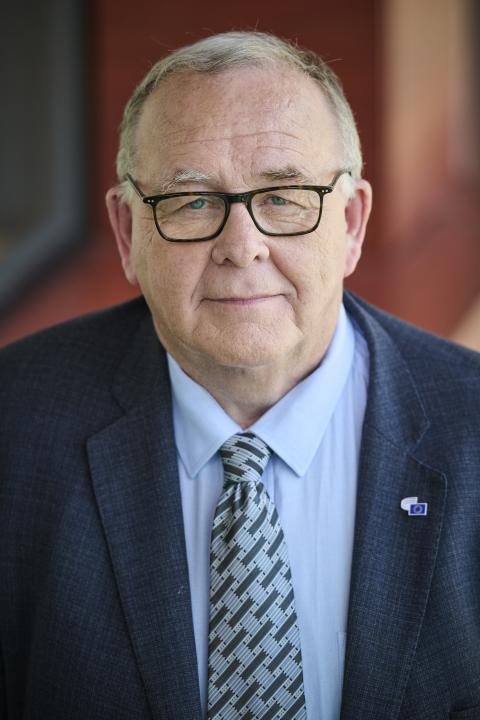
Dear readers,
I am honoured to write to you as the newly elected President of the European Economic and Social Committee (EESC). I want to warmly thank each of you and convey my sincere appreciation for the vital contributions that civil society organisations make every day to our communities.
As my work programme underlines, these contributions are needed now more than ever in the extraordinary and challenging times we are living through.
The prospect of war is again casting a shadow over Europe. Global instability is intensifying. The 2030 deadline for the UN Sustainable Development Goals is fast approaching with most off target. The climate crisis, biodiversity loss and water scarcity demand our urgent action.
Closer to home, over 20% of the EU population remains at risk of poverty and social exclusion. Demographic shifts, the complexity of achieving fair, green and digital transitions, and the pressing need for a skilled and protected workforce all require our attention. As the EU is increasingly relying on its own resources, the need for a strong economy is paramount. An economy that must compete on world markets and deliver jobs, innovation and prosperity.
In this context, it is understandable that the EU is evolving from a peace project into one that embraces defence. The EU will need a comprehensive approach to prepare citizens for this transformation. As this unfolds, it is critical that the EESC is a stronghold for democracy and civic engagement.
This is why, during my presidency, I will prioritise a people-centred work programme that puts civil society at the heart of Europe. My vision is of an EU of opportunities, security and resilience, and my work programme is organised around these pillars.
Achieving a Union of Opportunities means creating a Europe where everyone has a fair chance to thrive. This is about balancing economic growth, social inclusion and equal access to opportunities.
To realise a Union of Security, this pillar underscores the EESC’s crucial role in defending democracy, civic space and media freedom, while addressing threats such as disinformation and reduced public trust.
The Union of Resilience pillar focuses on the EU’s ability to respond to climate, industrial, and demographic challenges through long-term, integrated strategies that balance sustainability, competitiveness and fairness.
Central to this overall vision is the fight against poverty. While economic growth and job creation are essential, they are not enough. In-work poverty, child poverty and poverty among older adults persists.
Although a welcome step in the right direction, the EU’s efforts in recent years to tackle poverty have at best arrested a catastrophic rise, with numbers in poverty remaining stubbornly high. Over 93.3 million (or over one-fifth) of the EU population in 2024 were at risk of poverty or social exclusion. Such poverty not only leads to widespread alienation but contributes to disillusionment with and undermines trust in the EU and its democratic values.
I believe we can end poverty – and I will seek inclusive, collaborative solutions to support those most in need. People cannot participate fully in society if they are excluded. Likewise, if their security is under threat or if space for civil society is shrinking.
This is why your work – our work – is so essential to delivering a Union of Opportunities, Security and Resilience. Together, let’s put civil society at the heart of Europe.
Séamus Boland
President of the European Economic and Social Committee