Hearing with Civil Society from Bosnia and Herzegovina
Location
Skenderija 3a
Sarajevo
Bosnia & Herzegovina
This years' meeting of the EESC's Western Balkans Follow-up Committee outside of Brussels took place on 24 May 2022 in the Delegation of the European Union in Sarajevo, Bosnia and Herzegovina, and included a hearing with the civil society organisations (CSOs).
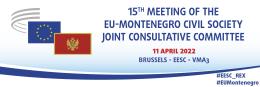
For the 15th time, the European Economic and Social Committee (EESC) and Montenegro held the Civil Society Joint Consultative Committee (JCC). It took place in Brussels and tackled issues such as: Current state of play in EU-Montenegro relations including 2021 Montenegro Report / Revised enlargement methodology – Cluster 1: The Fundamentals of the Accession Process, with a special focus on Economic Criteria, Public procurement, Statistics and Financial Control and the response to the COVID-19 pandemic / Overview of the civil society situation in Montenegro.
A joint declaration was adopted at the meeting and distributed to all relevant EU institutions, as well as to the Montenegrin authorities.
Chamber of Commerce and Industry of Serbia
Resavska 13 – 15
Belgrade
Serbia
It is a platform established within the institutional framework of the EU‑Serbia Stabilisation and Association Agreement (SAA), enabling representatives of both the EU and the Serbian civil society to monitor the country's accession negotiations, discuss issues of common interest and point out concerns to be tackled on the Serbian path towards the European Union.
Topics on the agenda: how to enhance the accession process – a credible EU perspective for the Western Balkans; the contribution of CSOs to the Green Agenda and sustainable development of the Western Balkans as part of the EU accession process; the state of social dialogue, as well as enabling civic space in the Western Balkans. @EESC_REX #EESC_WB
The EESC organised its 7th Western Balkans Civil Society Forum in Tirana on 16-17 April 2019.
The main topics on the agenda were the role of civil society organisations in promoting regional cooperation (trade and investment, connectivity and people to people relations), the state of social dialogue, as well as enabling civic space in the Western Balkans.
It brought together approximately 180 participants, including a broad range of civil society representatives from the EU and the Western Balkans, as well as representatives of EU institutions, international organisations and governments of the region.
Luca Jahier, President of the European Economic and Social Committee, SokolDedja, Deputy Minister for Europe and Foreign Affairs, Angelina Eichhorst, Director for Western Europe, Western Balkans and Turkey at the European External Action Service (EEAS), and Majlinda Bregu, Secretary General of the Regional Cooperation Council, participated in this major event.
A final declaration with recommendations from civil society organisations was issued at the end of the event.
This years' meeting outside of Brussels was held on 2 June 2016 in the Delegation of the European Union in Sarajevo, Bosnia and Herzegovina, and included a hearing with the civil society organisations (CSOs).
The goal of this hearing was for our Western Balkans Follow-up Committee to listen to the views on the role of civil society in Bosnia and Herzegovina, and to convey these messages to the government of Bosnia and Herzegovina and to the political authorities of the EU. The following topics were discussed at the hearing: social dialogue and civil dialogue, the state of the economy and the labour market, the participation of civil society organisations in the EU's enlargement process and in the implementation of the Reform Agenda 2015 – 2018, in Bosnia and Herzegovina. This hearing is a step towards the 6th Western Balkans Civil Society Forum to be held in 2017.