Europe's rural and urban territories are not developing evenly. It is critical to foster policies that curb this trend, ensure a fair and sustainable transition to a wellbeing economy in all areas and promote population rebalancing.
24 March, 2.45 p.m. The EESC will debate with Helena Dalli, European Commissioner for Equality, the newly proposed EU strategy for the rights of persons with disabilities ...
24 March, 4.00 p.m. OlivérVárhelyi, European Commissioner for Neighbourhood and Enlargement, will hear the EESC's proposals on how the EU can provide a credible EU perspective for the Western Balkans ...
25 March, 10 a.m.ValdisDombrovskis, European Commission Executive Vice-President for an Economy that Works for People, will discuss with the EESC the challenges of trade policy for a socially inclusive economic recovery from the COVID-19 crisis.
În cadruldezbaterii online organizate de Comitetul Economic și Social European (CESE), părțileinteresate din industriaaudiovizualului au participat la o dezbatereprivindviitoareapiață a mass-mediei din Europa, subliniindcât de importantăesteimplicareaorganizațiilor locale.
With billions of euros in the pipeline for recovery plans and little time to submit and review them, holding the authorities accountable for the management of funds will be pivotal in securing a recovery based on fundamental rights and the rule of law
The EESC is worried about the feasibility of a number of proposals contained in the pact. There are grave concerns that it may even add to the pressure on the already overwhelmed states of first entry, effectively turning them into closed centres for migrants at EU borders
Statement by EESC President Christa Schweng
I welcome today's signature of the joint declaration between the European Commission, European Parliament and the Council that sets out the Conference on the Future of Europe. The European Economic and Social Committee is looking forward to actively contributing to the debate, being invited as an observer.
We are looking forward to working on the European Commission's three major initiatives: a Communication on "the European Pillar of Social Rights Action Plan", a Proposal for a Directive to "strengthen the application of the principle of equal pay for equal work or work of equal value between men and women through pay transparency and enforcement mechanisms" as well as on "the Strategy for the rights of persons with disabilities 2021 – 2030".
The European Economic and Social Committee (EESC) broadly supports the Commission's legislative proposals on more efficient and fair taxation and praises their coordination at global level.
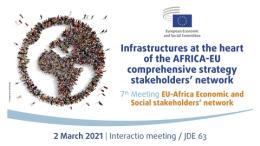
The European Economic and Social Committee (EESC) hosted on 2nd March the 7th Meeting of the representatives of African and EU economic and social stakeholders, a virtual event where speakers discussed the future of the EU-Africa partnership with a special focus in the fight against the COVID-19 pandemic and its consequences.
The European Economic and Social Committee (EESC) has adopted its position on the EU's economic priorities for 2021. It welcomes the steps taken in the strategy to address the challenges of the COVID-19 pandemic in the context of the European Green Deal, but is disappointed that the strategy proposed by the European Commission devotes too little attention to social issues. It also warns against phasing out support measures too early and advocates establishing new fiscal rules that will reflect social and economic realities after the pandemic.