The Water Resilience Stakeholder Platform will be launched on 21 September 2026, co-hosted by the European Commission, the European Economic and Social Committee and the Committee of the Regions. The afternoon will see the launch of the European Water Academy
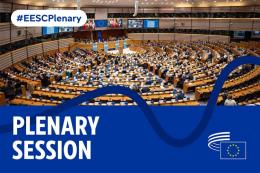
608th Plenary session, with the following debates: Better regulation; Modernising cohesion policy: the way forward; Presentation of the priorities of the French Economic, Social and Environmental Council; The EU Organic Awards... Web streaming
The Consultative Commission on Industrial Change (CCMI) of the European Economic and Social Committee will convene an expert hearing to advance policy discussions on fostering innovation and digitalisation in the construction sector.
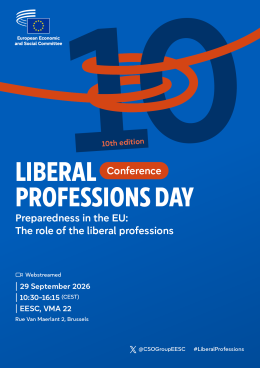
Preparedness in the EU: The role of the liberal professions
Location
Van Maerlant street 2, Room VMA 22
Brussels
Belgium
Join us on 29 September 2026 from 10:30 to 16:15 CEST in Brussels, when the Liberal Professions Category of the EESC will proudly present the 10th edition of the Liberal Professions Day with the theme 'Preparedness in the EU: the role of the liberal professions'. The conference is open to the public. For in-person participation, please register by 24 September 2026 via our registration form.
The European Public Diplomacy Days – EPDD – will be held from 30 September to 2 October 2026 and will bring together various different European Union (EU) institutions working on public diplomacy and international people-to-people initiatives. The idea is to share best practice and exchanging ideas.
Besides the EU institutions, there will be contributions from civil society, networks of regions and cities, cultural projects, academics and other practitioners from across the world.
The European Semester increasingly relies on Member States’ ability to implement reforms and investments. Delays often stem not from a lack of funding or policy guidance, but from administrative bottlenecks, limited technical expertise, excessive red tape, complex procedures or insufficient coordination across different levels of national government. The thematic debate will therefore examine how the European Semester could better assess and monitor administrative capacity at national level, as well as whether administrative reform should become a more prominent element in the country-specific recommendations. It will also examine what lessons can be drawn from the implementation of the national recovery and resilience plans, whether instruments such as the Technical Support Instrument could play a stronger role in supporting reforms. Finally, the aim will be to understand how these instruments can contribute, in the long term, to strengthening the capacity building of national administrations and stakeholders.
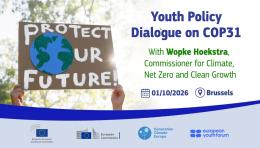
The European Commission and the European Economic and Social Committee, in cooperation with the European Youth Forum and Generation Climate Europe, will organise the Youth Policy Dialogue on COP31. The event will take place on Thursday 1 October 2026.