
European Economic
and Social Committee
'THINK RURAL' FROM THE START: PUTTING RURAL EUROPE AT THE HEART OF EU POLICY
The EESC is calling for a practical EU-wide 'rural proofing' tool to ensure that the impact of policies on rural people, businesses and communities is assessed from the outset. The approach should cover all policy areas and help shape the next EU budget and national and regional partnership plans.
Adopted at the September plenary, the opinion calls for mandatory screening of major EU proposals and more detailed territorial assessments where significant effects are identified. This could help prevent measures such as digital-only public services or centralised healthcare from disadvantaging areas with weak connectivity or long travel distances.
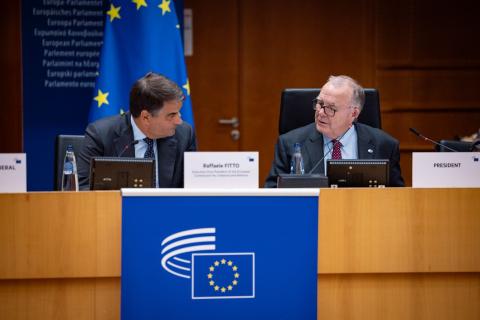
The opinion was presented during a debate on territorial cohesion with European Commission Executive Vice-President Raffaele Fitto.
The EESC has stressed that rural proofing must improve decisions rather than become a box-ticking exercise, and that implementation should involve local communities, clear responsibilities, adequate data and regular monitoring.
At the same time, the approach should reflect the diversity of rural Europe, from remote and mountain regions to islands and rural communities close to cities.
EESC President Séamus Boland said: 'Rural proofing is about making sure that geographical differences are taken into account when European policies are designed. Rural communities should not have to adapt to decisions made without their realities in mind.'
The EESC sees rural proofing as an important tool for delivering on the 'right to stay', giving people a genuine choice to remain in, return or move to a rural community.
That choice depends on access to affordable housing, healthcare, education, childcare, public transport, reliable digital connections and decent jobs.
'We need to change the way we look at rural Europe. Rural realities and potential must be considered across all policies, not only those traditionally labelled as rural or agricultural. This is why we need rural proofing,' EESC rapporteur Lidija Pavić-Rogošić concluded. (ks)