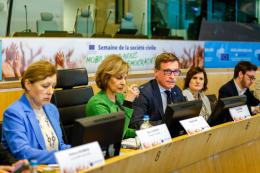
This year, the European Circular Economy Stakeholder Platform (ECESP), an initiative jointly developed and hosted by the European Economic and Social Committee (EESC), joined forces with the Belgian Presidency of the EU Council and the Finland-based World Circular Economy Forum (WCEF) for its flagship conference on 15 and 16 April at the Square, the Brussels Convention Centre.
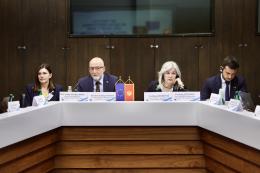
The 18th meeting of the EU-Montenegro Joint Consultative Committee (JCC), which took place in Podgorica today, sent a clear message to the EU institutions, that Montenegro is firmly committed to becoming the 28th member by 2028. The JCC members encouraged their organisations, the national authorities and the EU institutions to spare no efforts to accomplish the rule of law interim benchmarks. Obtaining the Interim Benchmark Assessment Report (IBAR) for the rule of law by June, will be a turning point in the EU accession process, enabling provisional closing of other chapters.
The European Economic and Social Committee (EESC), at the request of the Belgian Presidency of the Council of the EU, has unveiled crucial recommendations aimed at bolstering social cohesion, managing debt and prioritising investments in healthcare and employment across Europe. The EESC expressed concern that tight budgets might slow down progress in fighting poverty and climate change.
Având în vedere că în întreaga lume democrația este în declin, dezinformarea proliferează și nemulțumirile cresc în contextul creșterii inflației și al amenințării unui război, votul pentru noul Parlament European are o miză importantă.
La sesiunea plenară din martie a Comitetului Economic și Social European (CESE), fostul prim-ministru italian Enrico Letta a precizat că piața unică europeană se referă în primul rând la oameni și, la 30 de ani de la lansarea sa, trebuie să se concentreze asupra autonomiei strategice a Europei și asupra unor aspecte precum apărarea, telecomunicațiile, energia și finanțele.
This year the UNCSW, the UN’s top annual meeting on gender equality, will focus on ending women’s poverty. During its inaugural participation in the event, the EESC will contribute to the theme with a declaration comprising ten action points for the economic empowerment and social protection of women
În urma conferinței privind bolile rare de anul trecut de la Bilbao, Comitetul Economic și Social European și Comisia Europeană își unesc forțele pentru combaterea bolilor rare la nivel european.
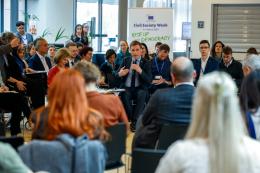
This week, the European Economic and Social Committee (EESC) hosted the first-ever Civil Society Week, where over 800 representatives from civil society organisations and youth groups gathered to discuss the incoming elections and the future of the EU. The takeaways will be incorporated into an EESC resolution in July that will outline what civil society expects from the incoming leadership of the European Parliament and Commission.
On 7 March, the European Economic and Social Committee (EESC) rewarded five non-profit organisations for their outstanding contribution to fighting mental health disorders, which have risen dramatically in the EU.
On 4 March, the European Economic and Social Committee (EESC) kicks off its first ever Civil Society Week, titled 'Rise Up For Democracy!'. This week-long event brings to Brussels more than 200 citizens' organisations and stakeholders from across Europe, including youth organisations, NGOs and journalists. They will be discussing the state of democracy, the challenges it faces, and the vital role civil society plays ahead of the EU elections, drawing up demands for the next EU leaders.