For some years now, the Konzerthaus Berlin has been enriching its analogue offer with digital alternatives. In this way, it allows more people to participate, get involved and interact in a new way with its projects. The pandemic accelerated their digitalisation, and new projects were developed, such as an interactive VR composition tool, a free app for "augmented reality" and a funny web series with the Konzerthaus Orchestra Berlin on the live gaming platform twitch. These projects allowed them to reach a new audience.
AIM (Associazione Italiana professionisti della Musicoterapia) brings together Italian professionals who use music to connect with their patients and to improve their neurological expressive abilities. The association aims to preserve, promote and enhance the music therapist profession, especially through professional training, networking, knowledge sharing and research, as well as the monitoring of professional activities for compliance with the code of ethics. During the pandemic, AIM supported music therapists who wanted to carry out remote interventions with their patients. A project for healthcare workers treating COVID-19 patients in the hospital of Bari (Italy) was carried out. Online tools have helped music therapy professionals to continue their work, and together with physical contact with patients, they can help achieve therapeutic objectives.
Oleg Marshev is a well-known pianist and music professor, with Russian origins, living between Italy and Austria. For this artist, online lessons were a way to survive during the pandemic. But the very strict lockdowns in Italy were hard for him, and he suffered from not being able to have in person concerts, with a public and an orchestra. He will, from now on, carry on both online and physical lessons.
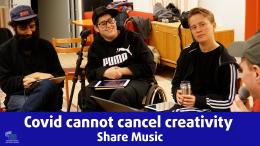
Share Music & Performing Arts is a Swedish association working on artistic development and inclusion. It works for everyone's right to experience, participate in and practise artistic and cultural activities. Its vision is that everybody should have the opportunity to express themselves artistically in a world where differences are seen as valuable. The association arranges performances and courses across artistic sectors for people with and without disabilities. It had used online tools only once before the pandemic, for a project to include isolated people living in areas with very low population rates. Due to the pandemic, Share Music & Performing Arts organised several online projects. It even prepared a concert online, which was then performed in presence with many musicians coming from different parts of Sweden who had never played together before.
Based in France, VRrOOm is working in the virtual reality industry. With its solutions it helps artists to make their shows accessible to a wide audience. VRrOOm explains that the pandemic helped them to boost innovation and creativity. However, they also state that virtual concerts cannot replace the energy that artists transmit through their faces. For the future, they think hybrid concerts will be the way forward.
Zylia is Polish company (Poznan) that is specialized in volumetric audio recording and post production. They found that, despite the hardship that the pandemic brought to the cultural sector, people working in the sector quickly learned to adapt to the situation also by learning more about new technologies. Zylia believes that times of crisis are a real test for all entrepreneurs to see if they are really creative. Live events that can be recreated in the virtual space will be the future, Zylia believes.
The video summarises the project "COVID cannot stop creativity - Digitalisation in the music sector: a lifetime during the pandemic", which explored how the music sector adapted to restrictive public health measures during the COVID-19 pandemic, through the smart use of digitalisation and innovation.