Európa

This page is also available in:

Európában az EGSZB kapcsolatot tart fenn a szociális partnerekkel és a civil társadalmi szervezetekkel a Nyugat-Balkánon, a keleti szomszédságban, az EGT-tag EFTA-államokban – Izlandon, Liechtensteinben és Norvégiában –, valamint az Egyesült Királyságban.

A Nyugat-Balkán nyomonkövetési bizottság – az EGSZB állandó belső testülete – az EGSZB erre a régióra irányuló tevékenységeinek legfőbb koordinációs eszköze. A kétévente megrendezett nyugat-balkáni civil társadalmi fórum a nyomonkövetési bizottság tevékenységének részét képezi.

Az EGSZB emellett kétoldalúan is együttműködik a Nyugat-Balkán csatlakozási tárgyalásokat megkezdett országaival és Törökországgal az ezen országok és az EU közötti társulási megállapodások keretében létrehozott szakosodott szerveken keresztül. E konzultatív vegyes bizottságok célja, hogy bevonják a szociális partnereket és a civil társadalmi szervezeteket az esetleges uniós tagsághoz vezető előcsatlakozási és reformfolyamatok nyomon követésébe. Mindegyik testület az EGSZB és a partnerország egyenlő számú tagjából áll, és általában évente egy vagy két alkalommal ül össze.

Az EGSZB emellett létrehozta a Keleti szomszédság nyomonkövetési bizottságát, amely a régió országainak, azaz Örményországnak, Azerbajdzsánnak, Belarusznak, Grúziának, Moldovának és Ukrajnának a civil társadalmával fenntartott kapcsolatok szélesítéséért felelős belső szerv.

Az Örményországgal, Grúziával, Moldovával és Ukrajnával való együttműködés fő mechanizmusai a civil társadalmi platformok, melyek lehetővé teszik az EU és a partnerországok civil társadalmi szervezetei számára, hogy figyelemmel kísérjék az ezekkel az országokkal kötött uniós megállapodások végrehajtásának folyamatát, és ajánlásokat fogalmazzanak meg az érintett hatóságok számára. Emellett Ukrajna és Moldova 2022-ben tagjelölt ország lett.

Belarusz és Oroszország esetében a kapcsolatokat a továbbra is szabadon működő civil társadalmi szervezetekkel tartják majd fenn. Ezek többsége az EU területéről működik. Az EGSZB a jövőbeni javuló feltételek reményében fontosnak tartja a párbeszéd életben tartását.

Az Európai Gazdasági Térség (EGT) az uniós tagállamokat és a három EGT-tag EFTA-államot (Izland, Liechtenstein és Norvégia) tömöríti egy olyan belső piacon, ahol az áruk, a szolgáltatások, a tőke és a személyek szabadon mozoghatnak. Az EGSZB tagja az Európai Gazdasági Térség konzultatív bizottságának, ahol közös érdekű kérdéseket vitatnak meg az EGT-tag EFTA-államok szociális partnereinek képviselőivel.

Végezetül az EGSZB-nek van egy EU–Egyesült Királyság nyomonkövetési bizottsága, amelynek feladata az EU, valamint Nagy-Britannia és Észak-Írország Egyesült Királysága közötti kapcsolatok nyomon követése a civil társadalom szemszögéből. Munkája középpontjába helyezi az EU és az Egyesült Királyság közötti, a kilépésről rendelkező megállapodás, valamint az Írországról és Észak-Írországról szóló jegyzőkönyv végrehajtását, amelyekről folyamatos párbeszédet folytat az Egyesült Királyság civil társadalmi szervezeteivel, valamint az EU és az Egyesült Királyság közötti kereskedelmi és együttműködési megállapodás végrehajtását, amellyel kapcsolatban az EU–Egyesült Királyság nyomonkövetési bizottság együttműködik az EU és az Egyesült Királyság közötti kereskedelmi és együttműködési megállapodás keretében működő uniós belső tanácsadó csoporttal.
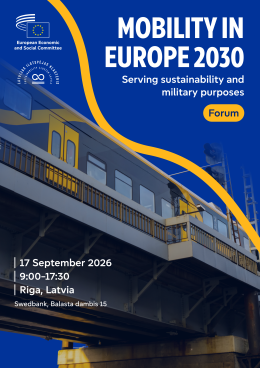
  • The TEN section, in cooperation with the Latvian Sustainability Cluster, is organising a forum on Mobility in Europe 2030 – serving sustainability and military purposes on 17 September 2026 in Riga, Latvia. The forum will deliver recommendations, identify investment and regulatory priorities, and clarify implementation pathways. The outcome of the forum will feed into the EESC’s policy work at EU level and provide practical guidance for Member States in advancing climate-neutral, resilient and competitive mobility systems, including strengthened military mobility, in response to evolving geopolitical challenges. 

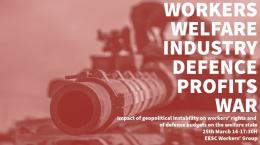
  • On 25th of March, the EESC Workers’ Group gathered together with a number of guest speakers from academia, trade unions and MEPs from the European Parliament, to discuss the current geopolitical situation, its impact on social and defence expenditure, its spillovers on supply chains and industry, and the consequences for the welfare states and workers’ rights.  

  • Published in
    Study
    36 pages

    This study examines how social partners and civil society organisations in six Member States — Italy, Austria, Hungary, Poland, Portugal and Sweden — view the effectiveness of current policies in raising employment levels and increasing adult participation in training. It also puts forward recommendations for improving policy outcomes.

  • Published in
    28 pages

    On 8 June 2022 the Consultative Commission on Industrial Change (CCMI) celebrated its 20th anniversary with a conference focused on the challenges of today and the prospects for tomorrow. This publication is a record of the occasion and a commemoration of what CCMI has achieved since joining the EESC.

  • Published in
    Study
    63 pages

    Exploring the evolving landscape of generative artificial intelligence (GenAI) within the European Union, this study delves into technological advancements, market dynamics, and regulatory challenges. It highlights the EU’s position in the global GenAI ecosystem, revealing significant US dominance, while uncovering sector-specific opportunities and risks across industries such as automotive, renewable energy, and education.

  • Published in
    Study
    71 pages

    Taking Stock of SDG 2 and Future Perspectives

  • The EESC:

    • suggests that a systematic stocktaking exercise be carried out, evaluating how EU funds and instruments are perceived and used by the Arctic stakeholders in practice;
    • calls for Arctic decision-makers at all levels to more rigorously apply legal obligations and draw inspiration from best-practice standards and mechanisms for including, consulting and empowering all section of local civil society;
    • supports and encourages full consultation of and cooperation with indigenous peoples in the Arctic, bearing in mind the principle of free, prior and informed consent, before adopting and implementing measures that might affect them directly.
  • Where do EU-US relations go from here?

    In this issue:

    • Our members comment on the results of the US presidential election and reflect on their possible impact;
    • Guest articles by Lennart NILSSON (General Confederation of Agricultural Cooperatives - COGECA), Beatriz ABELLÁN MERELO (Foundation for European Progressive Studies - FEPS) and Francesca CARLSSON (European Environmental Bureau - EEB);
    • Report on our recent conference on protecting Europe's most vulnerable through sustainable and affordable housing;
    • Interview with rapporteur Anastasis YIAPANIS on the new EESC opinion on 'Advanced materials for industrial leadership'.
    • Civil Society Organisations' Bulletin - December 2024
  • Reference number
    39/2024

    The European elections proved that the pro-European majority still holds, but also showed that voters across the EU demand urgent political and legislative responses to the challenges raised in the electoral campaign. Otherwise, the pro-European majority may risk losing support as citizens may increasingly turn their backs on the mainstream political forces.

  • Published in
    15 pages

    This document seeks to provide input to the Global Coalition for Social Justice. It highlights key messages from EESC opinions on the six priority areas identified by the International Labour Organization (ILO) for immediate action.