In this overview the European Economic and Social Committee (EESC) shares its opinions on the European Commission’s proposals for the Multiannual Financial Framework (MFF) 2028-2034, bringing together the perspectives of organised civil society on the future direction of the EU budget.
Report on the country visit to Bulgaria – 11–12 December 2025 and Authorities’ observations on the report
The report relays the views of Bulgarian civil society on freedom of association, freedom of assembly, the rule of law. This report has been communicated to the Bulgarian authorities, which in turn submitted their reply.
This study analyses European Union (EU) policy through the lens of intergenerational poverty (IGP), shifting attention from poverty as a static condition to the long-term persistence and transmission of disadvantage across generations.
The European Economic and Social Committee (EESC) on 18 June 2026 adopted a resolution to provide the European Commission with a contribution to its 2027 work programme.
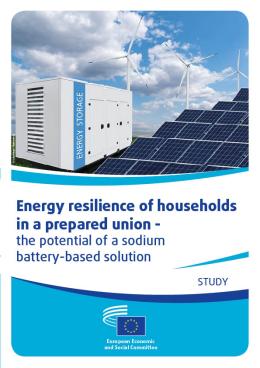
This study examines the potential of sodium ion battery technology to strengthen energy resilience in European households and businesses, particularly in meeting a 72 hour electricity self sufficiency objective under the EU’s preparedness strategy.
This brochure presents the European Economic and Social Committee (EESC). The EESC is not like other EU bodies. It is a unique forum for consultation, dialogue and consensus between representatives from all the different sectors of "organised civil society", including employers, trade unions and groups such as professional and community associations, youth organisations, women's groups, consumers, environmental campaigners and many more.
Report on the country visit to Poland – 15-16 December 2025 and authorities’ observations on the report The report relays the views of Polish civil society on freedom of association, freedom of assembly, the rule of law. This report has been communicated to the Polish authorities, which in turn submitted their reply.
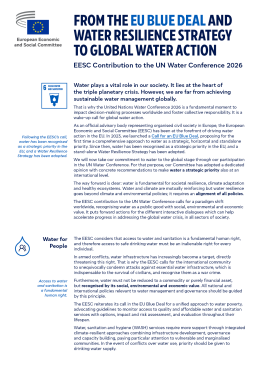
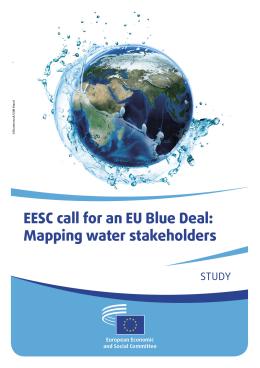
The European Economic and Social Committee (EESC) has initiated the EU Blue Deal to elevate water as a strategic political priority in the EU. This report is a key step in that process, providing a comprehensive mapping and analysis of water stakeholders and governance structures across all 27 EU Member States. The study compiles country-specific factsheets that outline each Member State water governance framework, key legislation, main actors, and pressing challenges such as water quality, climate risks, and infrastructure gaps.
This publication presents the Civil Society Organisations’ Group of the European Economic and Social Committee (EESC) and outlines its priorities for the term 2025-2028. Under the theme 'Striving for sustainable communities, the beating heart of civil society and democracy', the group will focus on the following priorities: