
European Economic
and Social Committee
Cyprus' opportunity to shape the EU by putting competitiveness first
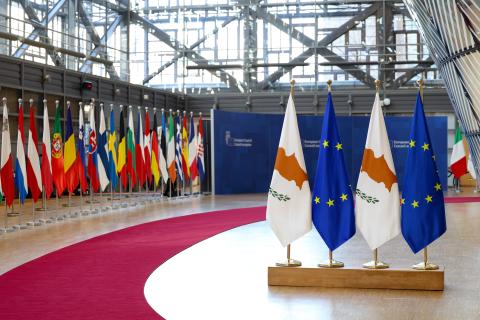
Cyprus, which is preparing to take the reins of the rotating EU presidency, has quietly emerged in recent years as one of Europe’s top business locations. It ranks among the best EU countries for startup first-year survival rates.
After a turbulent decade following the financial crisis, Cyprus has turned a new page, attracting founders and entrepreneurs who appreciate the island's business-friendly environment. The favorable Eastern Mediterranean climate may also play a role.
Starting in January 2026, the country will hold the EU presidency for the second time, since joining the bloc. This time, it does so under much better domestic circumstances than in 2012, although international challenges are more demanding. The chosen focus on security, in particular maritime security, but also water management and resilience are very timely.
Exchanging with the President and the responsible ministers, one cannot but be impressed by the strong drive and motivation to deliver a successful presidency. Cyprus aims to leverage its small size as an asset, positioning itself as a credible honest broker at the negotiation table, to advance the omnibus proposals and the EU’s Multiannual Financial Framework.
The EU presidency offers an opportunity to steer Europe’s agenda to what truly matters: accelerate competitiveness, negotiate a competitiveness-driven long-term budget, making sure that security and growth are aligned.
Powering SMEs and Local Champions
Europe’s true strength lies in its small and medium-sized enterprises, yet they continue to be hindered by red tape and confused by disjointed rule implementation. Cyprus has the chance to lead the effort on harmonizing digital and regulatory frameworks, simplifying compliance, advancing the Capital Markets Union to deliver real equity and venture funding to SMEs.
While numerous hidden world champions exist amongst EU companies, the technology gap with the US and China is widening. Our reliance on non-EU AI and digital technology providers is not only into a productivity issue but also a security concern. Failing to secure critical infrastructure due to technological dependence exposes Europe to vulnerabilities.
At the EESC, we call for coordinated investment and competition policy to break the dominance of large, often non-European, digital giants. Developing European AI value chains is a must-have for long-term competitiveness and security.
MFF: A Strategic Lever
The upcoming Multiannual Financial Framework (MFF) for 2028–2034 is far more than a budget—it’s the blueprint shaping Europe’s economic future. With public-private partnerships taking center stage, businesses become strategic drivers of innovation, workforce development, and competitiveness.
Cyprus’ EU presidency will advance the MFF negotiations and has the crucial opportunity to champion streamlined funding—cutting red tape and easing co-financing rules to ensure smaller businesses aren’t left behind. If it manages to deliver a budget proposal focused on investing in digital infrastructure, SME-tailored AI solutions, and aggressive upskilling, Europe stands a real chance to boost productivity and secure its industrial future while upholding and building on its standards.
Europe is in dire need of dedicated infrastructure investments. Mario Draghi recently updated the numbers in his initial report, showing that annual investments to the tune of 850bn EUR are needed to keep the EU competitive, render it more resilient and improve social and regional cohesion. The MFF alone cannot meet that alone, but if designed smartly, it can leverage the necessary private investments.
Water: Europe’s Most Urgent Strategic Asset
Cyprus unfortunately faces a water crisis that threatens agriculture, tourism, and regional stability. Unsurprisingly, it has identified water resilience as the top sustainability priority for the EU. On average, around 25 % of drinking water is lost due to leakages in the EU, reaching up to 60% in some parts of Europe. Hence, there is plenty of scope for improvement.
The EESC has championed an EU “Blue Deal” with ambitious targets, technological innovation, and investments in water reuse, smart monitoring, and renewable-powered desalination. Anything less than decisive action risks exposing not only Mediterranean societies and weakening EU cohesion. Cyprus is uniquely positioned and motivated to push for fast results, clear targets, and accountability, to not only pay lip service but achieve real momentum for Europe's communities threatened by water scarcity. This is Cyprus’ moment: to show Europe what leadership means.
The Security agenda
Cyprus takes the helm during a crucial time for Ukraine. Located in a geopolitical sensitive region, it understands the need for careful diplomatic negotiations.
For the Employers’ Group in the EESC it is absolutely clear that ssupporting Ukraine is not a zero-sum game. It’s an investment in Europe’s future stability. Reconstruction aid is a golden opportunity to rebuild Europe’s industrial might. European companies will be at the forefront of restoring Ukraine’s infrastructure, energy, and digital networks, creating contracts, partnerships, and demand that ripple across the Union.
At the EU's South-Eastern frontier, Cyprus has established multiple cooperation formats with its Eastern neighbors. These efforts are immensely valuable to ensure open communication channels and forging stable partnerships in a geopolitically strategic region. They also provide opportunities for economic cooperation.
By Sandra Parthie, President of the Employers' Group of the European Economic and Social Committee.
Originally published in the "EU review" of the Finnish Chamber of Commerce.