
European Economic
and Social Committee
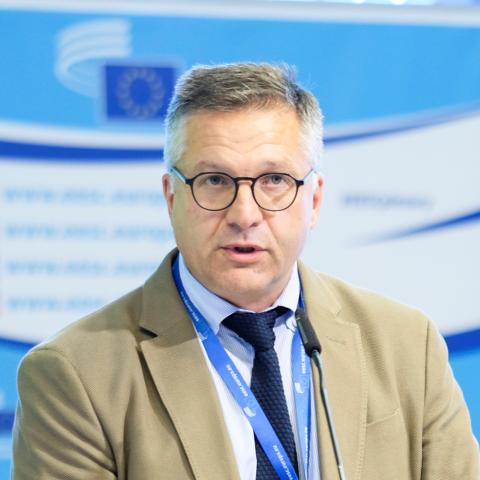
"You are the rapporteur for the opinion on "Promoting autonomous and sustainable food production: strategies for the post-2027 Common Agricultural Policy". What are the Committee's proposals in its opinion, particularly concerning the CAP after 2027 with regard to sustainable food production?
Stoyan Tchoukanov: The CAP has enabled the European Union to secure a stable supply of food in high and ever increasing quality for its growing population, while maintaining a family farming model. Over the last 65 years, the policy has evolved, but there is still much criticism of the three dimensions of sustainability of the new version that came into force in 2021.
Faced with new challenges, now more than ever, we need a stable long-term policy framework geared to sustainable food production and open strategic autonomy for the European Union. This should go hand in hand with protecting the diversity of types of farming in the EU and responding to societal and ecological needs ("public money for public goods"), while ensuring rural development.
Environmental and climate policies should not be seen as a burden in the recovery from the current crisis, but rather as part of long-term solutions and guidelines for decision making in the future. The latest reform strengthened the principle that every hectare supported must in return provide society with environmental services.
However, uniform funding per hectare does not reflect ecological reality or fair support from a social perspective. We believe that the next CAP should take this even further, stepping up environmental and social requirements that must be duly rewarded and safeguarded from unfair competition.
Therefore, surface-based payments should be repurposed towards incentives instead of compensations for the benefiting services, with a reasonable transition period that may go beyond the scope of one single Multiannual Financial Framework (MFF).
Small family farms should have the opportunity to choose to maintain income support based on surface payments and labour units on the farm, letting Member States define the criteria in the strategic plans. In order to stop the further drop in the number of farms in the EU due to the lack of generational renewal, action needs to be taken on increasing average earnings from farming, access to land (through investment grants, preferential credit, national legislation regarding land transfer), favourable investment conditions under the second pillar (bringing additional private money), upskilling (of farmers, farm workers and advisors), empowerment of women, good labour conditions, improvement of long-term prospects for farmers (pensions, etc.) as well as the overall attractiveness of rural areas.
The CAP must contribute to promoting consumer demand in the EU for healthier and more sustainable diets (organic, seasonal, local products), decrease food waste and regulate food markets to address the financialisation of the food sector that drives severe speculation, as huge profits are being made while Europeans are struggling to deal with rising food prices. Hikes in energy prices and risks of disruption in the supply of energy and fertilisers are part of the new normal, and the CAP should consider including counter-cyclical components and provide investment support schemes dedicated to improving the production and distribution of renewable energy at farm and local level in rural areas.
In our opinion we suggest that the Commission consider reinforcing public/private partnership insurance schemes – voluntary in the individual Member State – in the CAP instruments after 2027, in response to the consequences of extreme climate conditions. In view of the elections for the European Parliament in 2024, and the future enlargement of the EU, the EESC sees this opinion as an opportunity to set out some considerations/guidelines/proposals from organised civil society on the future shape and direction of the CAP post 2027, with a view to achieving autonomous and sustainable food production within a more holistic and comprehensive food policy. The aim is to contribute to the Commission's proposal for the next CAP by highlighting the needs of civil society organisations and society's expectations.