The EU-Serbia Joint Consultative Committee (JCC) held its 19th meeting on 7 April 2025 at the EESC in Brussels. This platform, established within the institutional framework of the EU-Serbia Stabilisation and Association Agreement (SAA), will enable representatives from both the EU and Serbian civil society to monitor the country's accession negotiations, discuss issues of common interest, and highlight concerns to be addressed on Serbia's path towards the European Union.
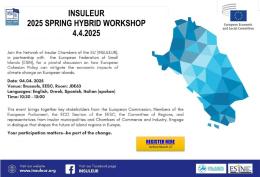
Hybrid workshop organized by the Network of the Insular Chambers of Commerce and Industry of the EU (INSULEUR) in partnership with the EESC #EESCPartnership
Location
EESC
Brussels
Belgium
Islands are on the front lines of climate change, yet they remain underrepresented in policy discussions. Their unique vulnerabilities-geographic isolation, extensive coastlines, and economic dependence on tourism and maritime transport-make adaptation a top priority. Research shows that economic losses for islands could more than double under all climate scenarios, threatening their economic and social stability.
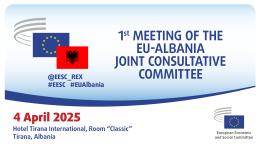
The first meeting of the EU-Albania Joint Consultative Committee (JCC) took place on 4 April 2025 in Tirana, Albania. This platform, established within the institutional framework of the EU-Albania Stabilisation and Association Agreement (SAA), will enable representatives from both the EU and Albanian civil society to monitor the country's accession negotiations, discuss issues of common interest, and highlight concerns to be addressed on Albanian's path towards the European Union.
The European Foundation for the Improvement of Living and Working Conditions (Eurofound), the European Training Foundation (ETF) and the European Economic and Social Committee (EESC) are jointly organising an event on social dialogue in the Western Balkans. This initiative, led by the EESC President and the directors of the two agencies, will focus on the quality of life and work, youth, and the exchange of experiences on social dialogue between the EU and the Western Balkans.
Civil Society Perspectives on Security, Digital Threats, and EU Relations
The 35th meeting of the EEA Consultative Committee focused on several timely and relevant topics, including: Ariane Rodert (EESC) presented on European security and the role of civil society in times of crisis – Lukas Lanzrein (Mission of Switzerland to the EU) updated participants on recent EU–Switzerland developments, including the December 2024 package deal – Alice Stollmeyer (Defend Democracy) and John Comer (EESC) addressed strategies to combat disinformation and safeguard democracy – Franca Salis-Madinier (EESC) discussed opportunities and challenges of using artificial intelligence in the workplace.
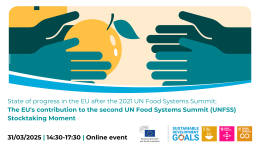
State of progress in the EU after the 2021 UN Food Systems Summit
Location
Brussels
Belgium
The UN Food Systems Summit (UNFSS) 2021 launched global actions to transform food systems and advance the SDGs. The second Stocktaking Moment (27–29 July 2025, Addis Ababa) will assess progress, highlight innovations, and address challenges. To contribute, the EESC, in collaboration with the FAO, will host an online public hearing on the EU’s progress toward sustainable food systems. The event will engage key stakeholders and explore governance gaps, with online participation.
This 14th meeting of the EU DAG set up under the EU-UK TCA featured the participation of Mr Sandro Gozi, Chair of the EP's Delegation to the EU-UK Parliamentary Partnership Assembly - as the result of efforts done to reconnect and engage with the European Parliament and the PPA - as well as of Mr Mike Clancy, Chair of the UK DAG under the TCA, following the increase and improvement of cooperation and engagement with the UK DAG.
The 15th meeting of the EU-Moldova Civil Society Platform will took place on 24 March 2025. During the meeting, the debate focused on assessing the state of play on the implementation of the EU-Moldova Association Agreement and the progresses towards opening negotiations on the Cluster 1 Fundamentals.